



The way people follow wars is changing rapidly. For many years, most people depended on television news to understand global conflicts. They watched breaking news updates, saw visuals of missiles or explosions, and relied on anchors to explain events. Information usually came in stages and was controlled by a limited number of sources.
Now, this pattern is shifting. Thousands of people across the world are tracking conflicts like the Iran-Israel war through the internet. Instead of waiting for television updates, they are using digital dashboards and online tools that provide real-time information. These platforms are often referred to as “internet war rooms,” even though they exist entirely online.
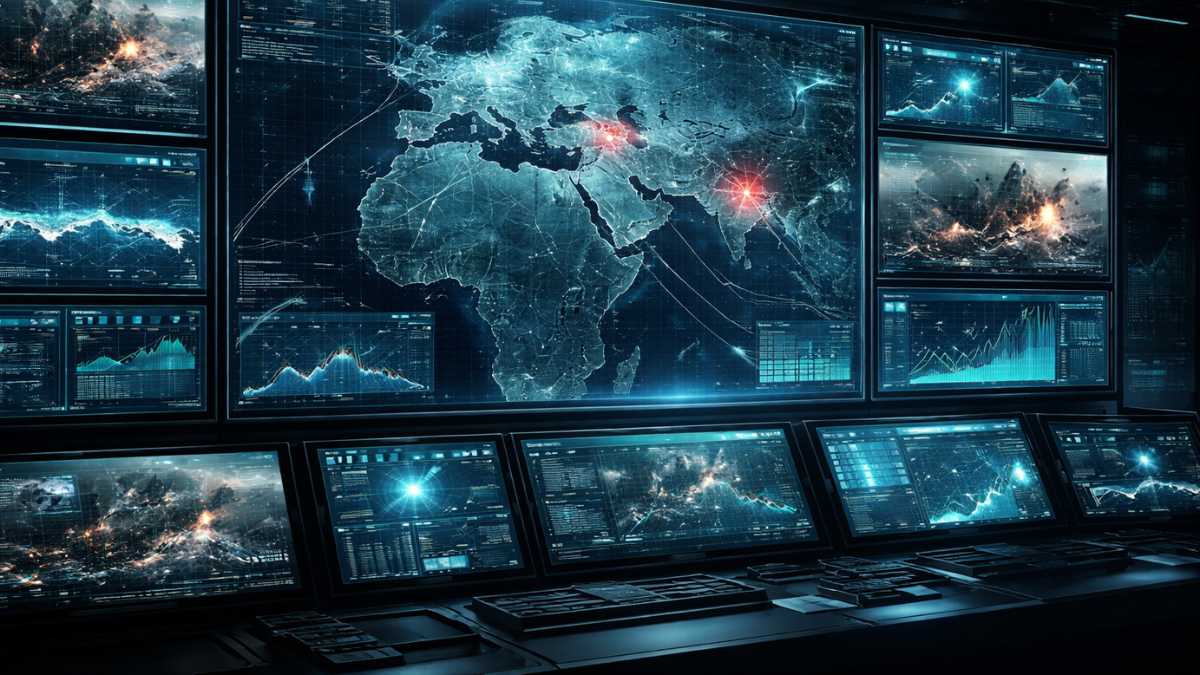
These dashboards combine different types of data into one place. A single screen can display satellite imagery, aircraft movement, social media updates, financial signals, and breaking news alerts at the same time. This allows users to observe events as they unfold, without switching between multiple sources. As a result, even people without professional training can monitor global developments with ease.
Jean-Noël Barrot says EU plans sanctions on 9 people over alleged Bucha war crimes
How AI and OSINT Dashboards Work
At the core of these systems is open-source intelligence, commonly known as OSINT. This method involves collecting and analyzing publicly available information. It includes satellite images, flight tracking data, ship movements, social media posts, and news reports from different regions.
These data sources are brought together through digital dashboards that update in real time. This makes it possible to follow ongoing events with a level of detail that was once limited to experts. Users can track aircraft routes, observe changes in geographic areas, and follow live updates from social media platforms, all within a single interface.
Artificial intelligence has played a major role in making these tools more accessible. Many dashboards are built using AI-powered coding systems, allowing them to be created quickly and with fewer technical skills. In some cases, these systems are developed in just a few hours by connecting multiple data sources. This rapid and experimental approach is sometimes described as “vibe-coded,” where tools are built quickly with the help of AI guidance rather than traditional development processes.
The result is a powerful but easy-to-use system that gives users a real-time view of the conflict. These dashboards resemble professional intelligence tools but are available to anyone with internet access.
The Benefits and Challenges of Real-Time War Tracking
The rise of internet war rooms offers several advantages. One of the most important is speed. Information becomes available much faster compared to traditional media, allowing users to stay updated without delay. Another benefit is the availability of multiple perspectives. Instead of relying on a single source, users can view data from different channels, which can help build a broader understanding of events.
Satellite internet crackdown grows in Iran as black-market Starlink sales rise
At the same time, these tools present significant challenges. One major concern is misinformation. Not all content shared online is accurate or verified. Old videos can be presented as current events, and images may be taken out of context. Social media posts, in particular, can spread unverified claims quickly.
Another issue is information overload. These dashboards display large amounts of data simultaneously, which can be overwhelming for users. It can be difficult to identify what information is important and what can be ignored. In addition, there is often a lack of context. While users may see movements or updates, they may not fully understand the reasons behind them.
Many users are not trained analysts, which increases the risk of misinterpretation. Incorrect conclusions can spread rapidly, adding to confusion rather than clarity. Despite these challenges, the use of AI dashboards and OSINT tools continues to grow, attracting more users who want real-time access to global events.
This shift reflects a broader change in how wars are observed. Instead of relying only on traditional media, people are increasingly turning to decentralized, real-time systems that allow them to track and interpret events on their own.