



A group of twenty-four U.S. states has filed a lawsuit to stop the latest global tariffs introduced by the administration of Donald Trump. The case marks the first legal challenge to the new tariffs that were announced shortly after a major court decision earlier this year.
The lawsuit was filed in the United States Court of International Trade in New York. The states argue that the new tariffs are illegal and violate the limits set by the U.S. Constitution. They say the administration cannot avoid a recent ruling by the Supreme Court of the United States by using a different law to impose similar trade measures.
States File Legal Challenge Against New Tariffs
The states involved in the lawsuit include places such as California, New York and Oregon. Two additional states, Pennsylvania and Kentucky, also joined the case. These two states have Democratic governors but Republican attorneys general.
The states claim the newly announced tariffs are unlawful. They argue that the administration is trying to bypass the effects of the Supreme Court ruling by relying on another legal authority.
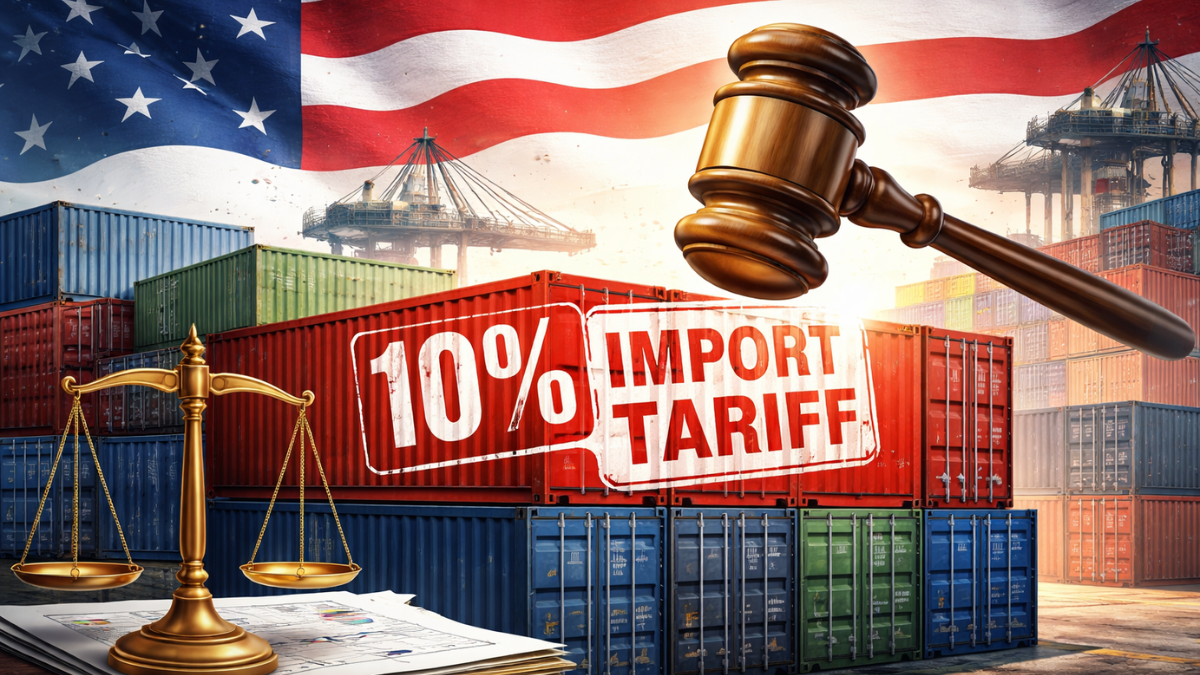
Under the new policy, a ten percent tariff has been placed on imported goods. Scott Bessent said the tariff rate could rise to fifteen percent later in the week.
Businesses to receive tariff refunds after US Supreme Court blocks Trump import duties
The states say the import duties could cost Americans, businesses and state governments hundreds of billions of dollars. Companies that depend on imported goods may have to bear higher costs, which could later push up prices for consumers.
During a press conference, Dan Rayfield said the new tariffs are an attempt to avoid working with Congress, which the U.S. Constitution requires for major trade decisions.
The states have asked the court to block the tariffs and order refunds for any payments already collected under the new policy.
Supreme Court Decision Led to New Trade Order
The dispute intensified after a ruling from the Supreme Court of the United States on February 20. In that decision, the court struck down a large portion of earlier tariffs that had been imposed under the International Emergency Economic Powers Act.
The court ruled that the law did not give the president the authority to impose such broad tariffs. The decision was seen as a major setback for the administration’s trade policies.
Soon after the ruling, Donald Trump issued a new executive order that introduced tariffs under Section 122 of the Trade Act of 1974. This law allows the president to place temporary duties of up to fifteen percent on imports for a maximum of 150 days.
Section 122 can be used to address serious balance-of-payments problems. It does not require a detailed investigation before tariffs are introduced. However, if the tariffs continue after 150 days, Congress must approve their extension.
Supreme Court setback pushes Trump to activate 1974 trade law for new global tariffs
States Say Trade Law Is Being Misused
The states involved in the lawsuit argue that Section 122 was designed to deal with rare financial emergencies related to international payments. According to the legal filing, the rule was originally meant for older monetary risks that existed when foreign governments could exchange their dollars for gold held by the United States.
They say the current tariffs are being used to deal with trade deficits instead. A trade deficit occurs when a country imports more goods than it exports.
The states argue that using the law for trade deficits is not appropriate and that the administration is trying to avoid the role of Congress in trade decisions.
The administration has said it will defend the tariffs in court. A statement from White House spokesperson Kush Desai said the government believes the president is using authority granted by Congress to address international payments problems and the country’s balance-of-payments deficits.
At the same time, the court is already dealing with about two thousand lawsuits from businesses. These companies are seeking refunds for more than 130 billion dollars in tariffs that were paid under earlier policies that were struck down by the Supreme Court.
Following the February ruling, the court ordered United States Customs and Border Protection to begin processing refund claims from companies that had paid those tariffs.