



A major money laundering case has come to light involving a Mexican national, Gabriel Arturo Castillo, who has pleaded guilty in the United States. The case shows how illegal drug money was secretly moved from the U.S. to Mexico using a complex financial system.
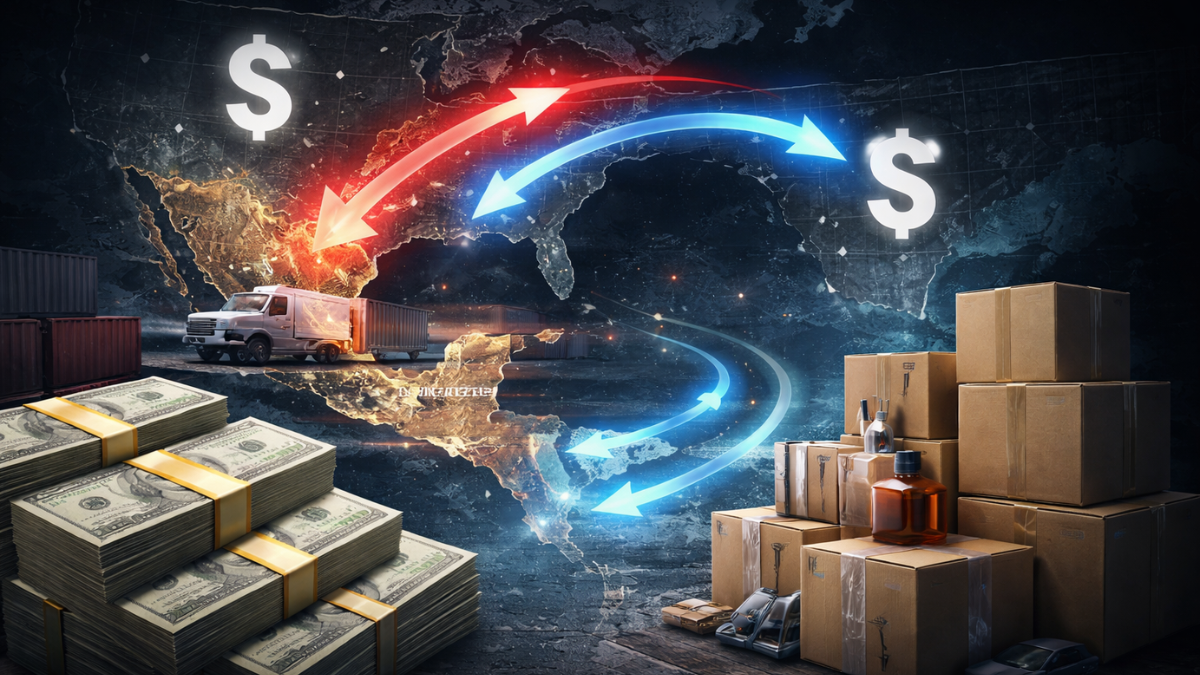
The scheme lasted for about two years and involved millions of dollars. Instead of physically carrying cash across the border, the group used a method known as a black-market peso exchange. This system helped hide the true source of the money.
According to court documents, large amounts of cash from illegal drug sales were collected in different cities across the United States. This money was either deposited into bank accounts or transported to Laredo, Texas, which played a key role in the operation.
The main goal of the scheme was to move drug money back to Mexico without raising suspicion. At the same time, it allowed drug cartels to receive their profits in pesos, their local currency.
How the Black-Market Peso Exchange Worked
The process used in this case may seem complex, but it can be explained in simple steps.
First, illegal money from drug sales was collected in U.S. cities. This money was in U.S. dollars. Instead of sending it directly to Mexico, the group used a different method.
The cash was moved to Texas, especially near the border. From there, it was sold to business owners in Mexico who needed U.S. currency. These business owners then used the money to buy goods from stores in the United States.
Some of these goods included perfumes and other retail products. After purchase, the items were transported from Texas into Mexico.
Once the goods reached Mexico, the business owners sold them. They then paid the drug trafficking groups in pesos. This allowed the cartels to receive money that appeared clean and legal.
This system helped hide the illegal origin of the funds. It also avoided the risk of physically moving large amounts of cash across the border.
Officials described this as trade-based money laundering. Rodrick Benton from IRS Criminal Investigation explained that such schemes use normal business activities to cover illegal money movement.
These types of systems have existed for many years. However, they are difficult to detect because they mix legal trade with illegal money.
Investigation, Charges, and Legal Action Against Castillo
The case was investigated by U.S. law enforcement agencies, including drug enforcement and financial crime units. Officials such as Miguel Madrigal from the Drug Enforcement Administration highlighted how agents were able to identify the cartel-linked activities.
Jasen Butler jailed for $4.5 million fraud involving U.S. military fuel contracts
Authorities followed the money trail closely. By examining financial records and trade movements, they uncovered how the system operated.
The investigation showed that Gabriel Arturo Castillo played a key role in moving and hiding drug proceeds. The operation involved several individuals working together across borders.
Officials, including A. Tysen Duva from the Justice Department, stated that such financial systems support dangerous drug trafficking networks and harm legitimate businesses and trade.
Law enforcement agencies in the United States also worked with partners in Mexico. This cooperation led to the arrest and extradition of Gabriel Arturo Castillo to the United States in August 2025.
Castillo has now pleaded guilty to conspiracy to commit money laundering. This is a serious federal offense. The case is being handled by prosecutors including Keith Liddle, Stephanie Williamson, Lance Watt, and Amanda Gould.
The court has scheduled sentencing for July 7. Castillo faces a maximum sentence of up to 20 years in prison. A federal judge will decide the final punishment after reviewing legal guidelines.
John G. E. Marck, Acting U.S. Attorney for the Southern District of Texas, stated that such financial networks play a key role in supporting narcotics trafficking.
Officials emphasized that tracking and stopping money laundering is critical in fighting drug-related crime. The case shows how complex systems are used to move illegal money and how authorities work together to stop them.