

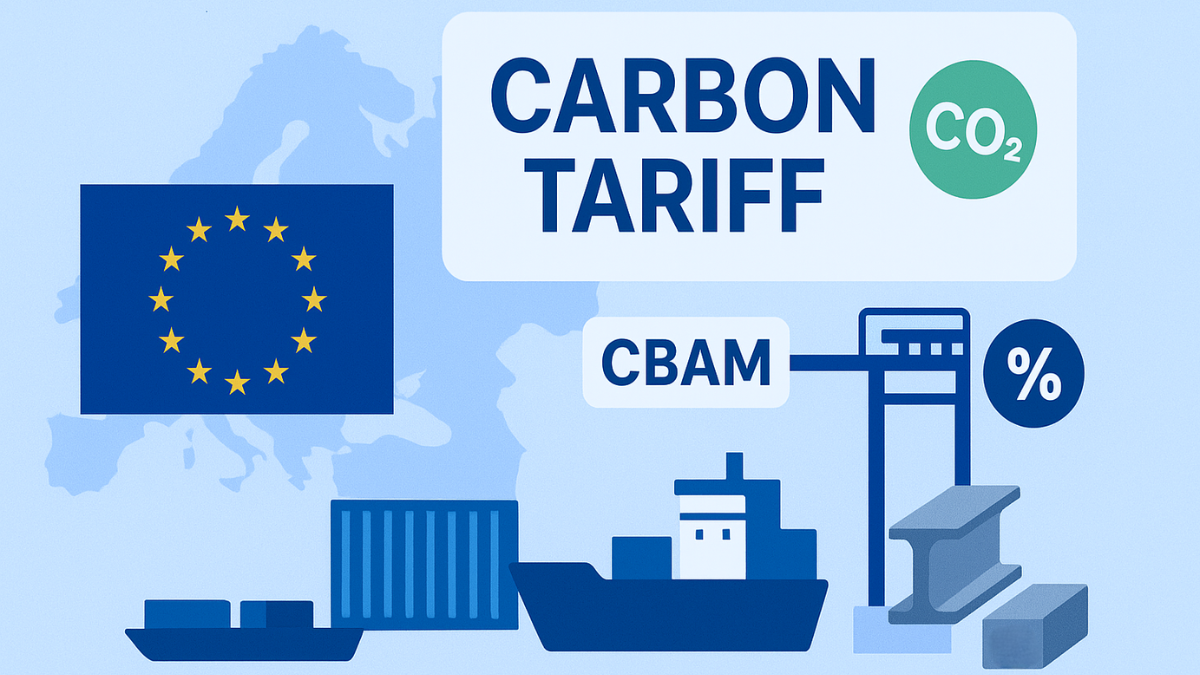


Europe is preparing to launch the world’s first carbon tariff, known as the Carbon Border Adjustment Mechanism (CBAM). This new rule will fully take effect on January 1, 2026, and it is designed to make sure that imported products face the same pollution costs as products made inside the European Union.
CBAM applies to goods that take a lot of energy to produce. These include steel, aluminum, cement, fertilizers, hydrogen, and electricity. Many of these materials are essential in construction, transportation, farming, and manufacturing.
Europe already requires its own factories to buy carbon allowances under the Emissions Trading System (ETS), which began in 2005. The ETS limits the amount of greenhouse gas emissions that power plants and industrial sites can release. If companies pollute more, they must buy extra allowances. Each allowance equals one metric ton of CO₂.
For years, some industries received free allowances because they argued that paying full carbon costs would make their products more expensive compared to imported goods from places without such rules. They also warned that production could move to countries with weaker climate policies, causing more pollution overall. This problem is known as carbon leakage.
CBAM aims to stop this. Mohammed Chahim, a key negotiator involved in shaping the policy, has explained that the goal is to ensure fairness. European producers already work under strict climate rules. CBAM helps prevent foreign producers from gaining an unfair advantage by avoiding similar costs.
How CBAM Works and Who Must Follow It
The European Union finalized CBAM rules in May 2023. A transitional phase began later that year. During this phase, which ends on December 31, 2025, importers had to start reporting the direct and indirect carbon emissions linked to their products. They were required to submit quarterly reports, which helped prepare them for the full system.
On January 1, 2026, CBAM enters its definitive period. Importers must begin paying fees through CBAM certificates. The cost of these certificates is tied to the average price of carbon under the EU ETS.
At first, the fee will represent only a small percentage of the ETS price. Over eight years, the share will slowly rise until it matches 100 percent of the weekly ETS allowance price. If the exporting country has its own carbon-pricing rules, the CBAM fee may be reduced or even eliminated.
The rules apply only to importers bringing in more than 50 metric tons per year of covered goods. This limit excludes about 90 percent of importers, mostly smaller businesses. However, it still covers about 99 percent of emissions from the targeted products, since large manufacturers handle most of the imports.
Although the list of affected goods is limited, the measure has gained major attention. According to international data, these goods represent about 3 percent of all EU imports from outside the region and about 0.31 percent of global greenhouse gas emissions in 2022.
Reactions from Around the World and Early Effects
CBAM has sparked debate globally. Some countries, especially in the Global South, believe the tariff could hurt their industries and see it as a form of pressure. One country sends about 97 percent of its aluminum exports to the EU, making it especially exposed to the new rules.
Inside Europe, some companies worry about rising costs as free ETS allowances are reduced. Importers have also found emissions reporting difficult. Trevor Sutton, who studies trade and clean energy policy, has noted that CBAM includes complex reporting and tracking requirements.
Even with concerns, the policy has already influenced global decisions. Countries such as Brazil and Turkey have introduced carbon-pricing systems. The United Kingdom plans its own carbon border system for 2027. Some companies abroad have begun producing cleaner materials, including steel made with hydrogen, to remain competitive in the European market.