

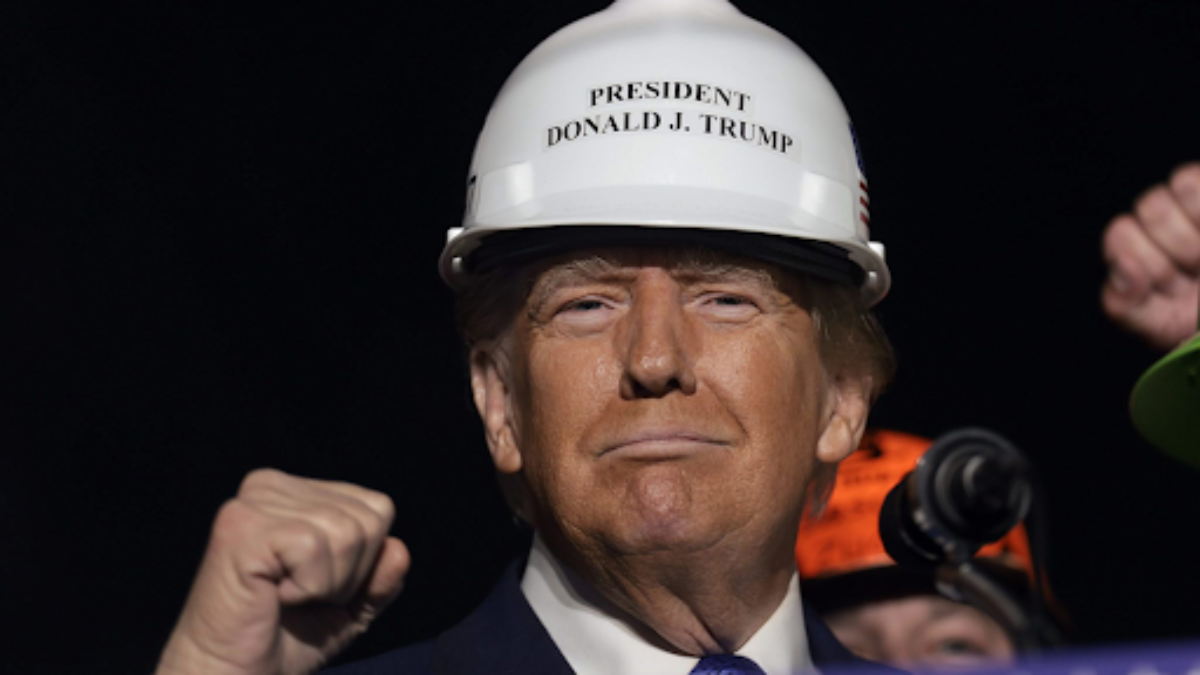


Across the United States, a quiet but serious problem is unfolding for blue-collar workers. While many people are focused on how artificial intelligence might replace office jobs, the workers who build, repair, transport, and manufacture the country’s goods are facing growing difficulties right now. Even with repeated promises to revive key industries, blue-collar jobs have continued to fall throughout 2025.
Government data show that several major blue-collar sectors are losing more jobs than they gain. Only construction added jobs in September, but that small increase could not make up for losses elsewhere. Transportation saw the biggest hit, with more than 25,000 jobs disappearing in a single month. Manufacturing also lost another 6,000 jobs, adding to its steady decline.
For the first time since the pandemic years, blue-collar job growth has turned negative. This is not a sudden drop, but a faster continuation of a long decline that started months earlier. Year-over-year data show that payroll losses have grown more quickly since January, making it clear that workers in these industries are under increasing strain.
Numbers Show a Clear Decline in Key Sectors
The situation becomes clearer when looking at the five main blue-collar “super sectors”: construction, transportation and warehousing, manufacturing, mining and logging, and utilities. These industries employ millions, yet all are seeing a steady drop in job opportunities.
Between April and September, goods-producing industries lost more than 70,000 jobs, with nearly 60,000 coming from manufacturing alone. Mining and logging also recorded losses, while service areas tied to blue-collar work grew only slightly, mostly because of new roles in health care.
Construction, often seen as a key economic indicator, remains fragile. It slows down quickly when growth weakens or borrowing costs rise. Labour shortages have also worsened due to stricter immigration rules, reducing the pool of workers for physically demanding jobs.
Transportation is struggling as well. Shipping, trucking, and warehousing have all seen job cuts driven by high operating costs, lower demand, and slowdowns in global trade. These pressures have left many workers in this sector feeling increasingly unsure about their future.
Policies, Tariffs, and Uncertainty Affect Hiring
The administration has promised to strengthen American industry, but several policies have created uncertainty for businesses. Tariffs are a major concern, as companies struggle to plan when tariff rules can change from month to month. This uncertainty makes many employers hesitant to hire new workers or expand their operations.
Tariffs also make imported goods more expensive, leaving families with less spending power. When people buy less, companies produce less, and demand drops across many blue-collar industries. This often results in hiring freezes and job cuts.
Experts say it is difficult to measure the exact effect of tariffs on jobs, but many agree they have not produced lasting growth in manufacturing. Instead, businesses have become more careful and less willing to take risks.
Long-term global changes add to the challenge. Many labour-heavy jobs have moved overseas or been replaced by machines. Even factories that stay in the U.S. now depend more on automation, allowing them to produce more with fewer workers.
Automation Rises Even as Jobs Fall
Recent data shows a surprising trend: manufacturing output has increased this year even though factories employ fewer workers. This highlights how fast automation is spreading. Machines and advanced systems now perform tasks that once required large groups of people.
This shift is not new, but it has become more noticeable in 2025. Factory productivity keeps rising, yet the number of workers on the floor continues to fall. The industry may look strong on paper, but many workers are not sharing in those gains.
Manufacturing has made up a smaller share of total employment for more than 50 years. Many jobs have moved toward service fields like health care and education, which rely more on people and less on machines. For blue-collar jobs tied to physical production, avoiding these changes has been much harder.
The mix of tariffs, a slowing economy, tighter immigration rules, and growing automation has created difficult conditions for blue-collar workers. Important industries such as steelmaking, construction, trucking, and mining are seeing steady job losses. Workers in these fields now face fewer opportunities and increasing uncertainty, even as promises to revive traditional industries continue.