

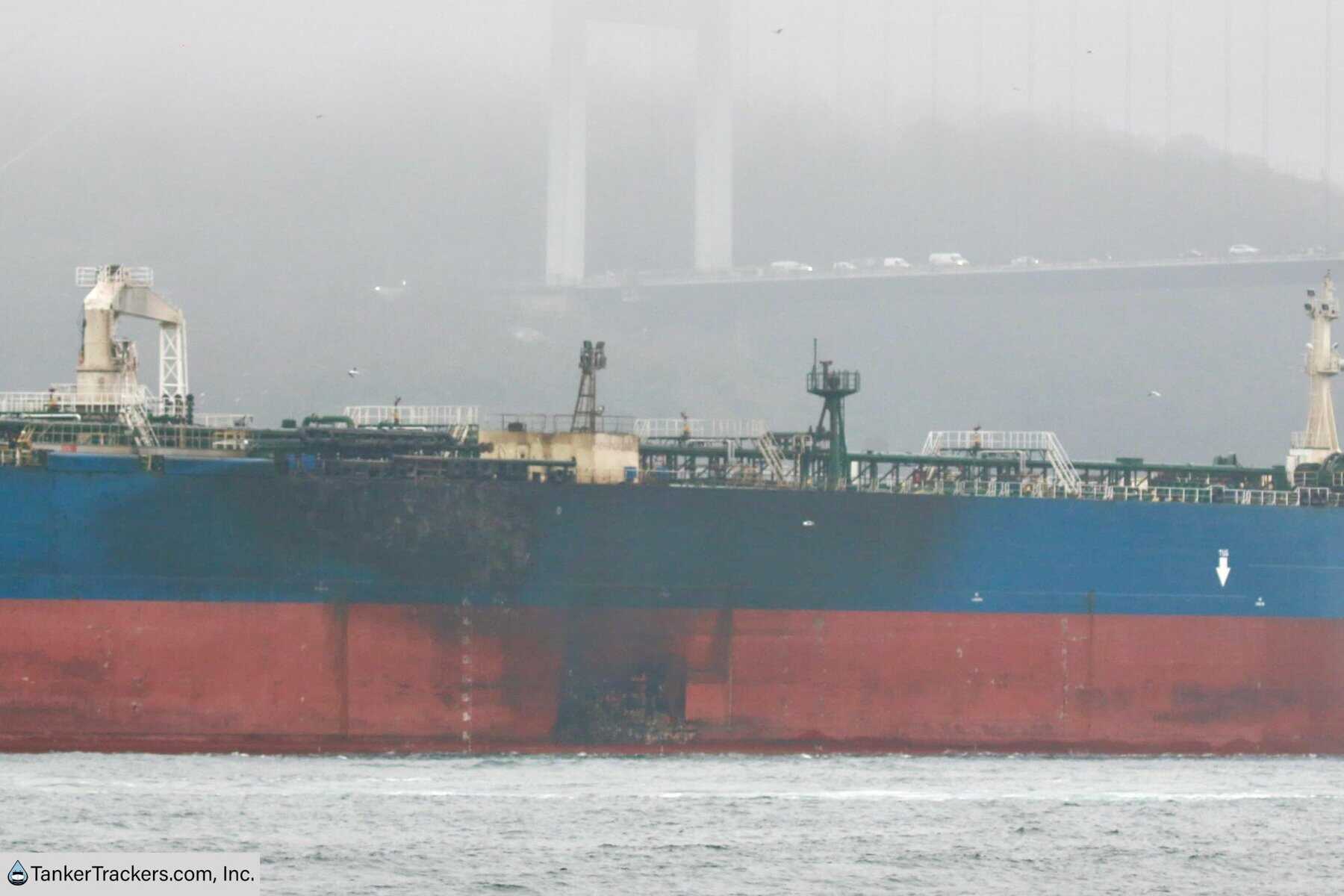


A damaged oil tanker linked to Russia’s so-called “shadow fleet” has arrived near Istanbul, Turkey, drawing attention to the risks faced by vessels involved in moving Russian oil under international sanctions.
The tanker, named URSUS MARITIMUS, was spotted near Istanbul on January 25, 2026, according to vessel tracking group TankerTrackers, which shared photographs of the ship on social media platform X. The images show clear signs of heavy damage, including a hole below the waterline and visible burn marks on the deck and upper structures of the vessel.
The damage is believed to be the result of a drone strike that occurred more than a month earlier at Russia’s Taman port, located on the Black Sea coast.
Drone strike at Russian port left visible damage
Data published by monitoring platform blinzka indicates that the tanker was attacked by Ukraine’s Defense Forces on the night of December 22, 2025, while it was at the port of Taman.
Taiwan moves to block sanctions evasion after Ukraine warns Russia needs foreign parts
Photographs released by TankerTrackers show a breach in the hull below the waterline, reportedly caused by an FP-1/2 drone. Fire damage is also visible on the vessel’s deck and superstructure, suggesting that the attack affected multiple sections of the tanker.
Despite this damage, URSUS MARITIMUS was later able to continue its journey and reach Turkish waters. The ship was seen near Istanbul, one of the world’s busiest maritime corridors connecting the Black Sea to the Mediterranean through the Bosphorus Strait.
The presence of a damaged tanker in such a heavily trafficked area has raised concerns among maritime observers, although no official safety incidents have been reported in connection with its arrival.
Linked to Russian oil exports under sanctions
According to the Defense Intelligence of Ukraine, URSUS MARITIMUS was actively involved in exporting Russian oil and petroleum products during the period when Russia’s energy sector has been under G7 and European Union oil embargoes.
The tanker is described as part of a wider network of vessels often referred to as Russia’s “shadow fleet.” These ships are commonly used to transport oil while attempting to avoid detection, insurance restrictions, and compliance with Western sanctions.
Intelligence officials said the tanker operated in both the Baltic Sea and the Black Sea, regions that have become key routes for Russian oil exports since sanctions were introduced.
Russian Urals oil hits historic discount in China after Indian buyers pull back
AIS switched off during voyages
One of the key details highlighted by Ukrainian intelligence is the tanker’s use of AIS blackouts. The Automatic Identification System (AIS) is an international maritime tracking system designed to improve safety and transparency by broadcasting a vessel’s identity, position, and movement.
According to the information shared, URSUS MARITIMUS conducted several voyages with its AIS switched off, including operations near the Russian oil port of Ust-Luga.
Turning off AIS is not illegal in all cases, but it is widely seen by regulators and shipping watchdogs as a red flag, especially when used repeatedly by vessels transporting sanctioned cargo.
Such practices have been closely monitored by governments, insurers, and maritime authorities, as they can increase the risk of accidents and make enforcement of sanctions more difficult.
Vessel details and flag state
URSUS MARITIMUS was built in 2005, making it a nearly 21-year-old tanker. The ship currently sails under the flag of Liberia, a flag state commonly used in international shipping due to its open registry system.
Liberia is one of the world’s largest ship registries, and many commercial vessels operate under its flag regardless of the nationality of their owners or operators.
There has been no public statement from the vessel’s owner, operator, or flag authority regarding the damage or the ship’s arrival in Turkish waters.
Turkey’s strategic maritime position
Turkey sits at a critical crossroads between Europe and Asia and controls access between the Black Sea and the Mediterranean via the Bosphorus and Dardanelles straits. As a result, vessels traveling to or from Russian ports must often pass close to or through Turkish waters.
The arrival of URSUS MARITIMUS near Istanbul highlights Turkey’s ongoing role as a key maritime transit country amid rising geopolitical tensions linked to the war in Ukraine and global energy sanctions.
While Turkey has not joined Western sanctions on Russian oil, it has repeatedly stressed the importance of maritime safety and compliance with international shipping rules in its waterways.
Ongoing monitoring of “shadow fleet” activity
The case of URSUS MARITIMUS adds to growing international scrutiny of Russia’s shadow fleet operations. Analysts and intelligence agencies continue to monitor aging tankers, opaque ownership structures, and high-risk shipping practices linked to sanctioned oil exports.
Photos and tracking data shared by independent monitoring groups like TankerTrackers and blinzka have become important sources of information, offering rare visual evidence of damage and movements that might otherwise go unreported.
As the conflict in Ukraine continues and sanctions remain in place, incidents involving damaged tankers and covert oil shipments are likely to remain under close observation by maritime and security experts worldwide.