

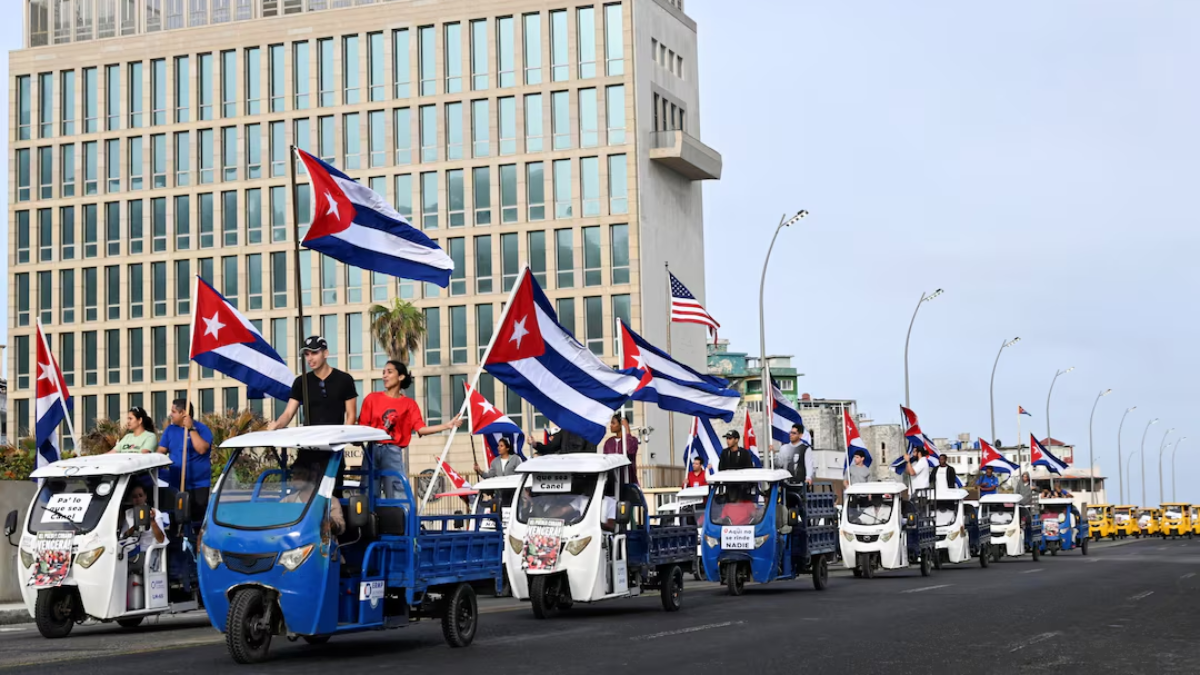


Cubans recently held a striking protest along the famous Malecon boulevard in Havana. Instead of using cars or buses, people rode bicycles and electric tricycles. This was not just a creative choice. It reflected the difficult reality of daily life in the country.
The protest was organized as a show of defiance against sanctions imposed by the United States under Donald Trump. Participants carried flags and banners criticizing these measures. They moved together in a peaceful caravan and passed by the US Embassy. The protest clearly showed their frustration with the economic pressure placed on their country.
Miguel Díaz-Canel joined the event, riding along with the participants. His presence showed that the government supported the rally.
The event was smaller than the large demonstrations often seen in Cuba. This was mainly because of fuel shortages. Many people cannot use cars or public transport easily. This has made travel difficult across the country.
Because of this situation, bicycles and electric tricycles are now widely used. They are part of daily life for many people. The protest itself became a strong symbol of how people are adapting to these challenges.
Cuba faces deepening crisis with blackouts and protests as US raises political issues
Fuel Shortages and Economic Struggles
Cuba is facing a serious fuel crisis. This has affected transportation and everyday activities. Public transport services are limited. Many vehicles cannot run due to a lack of fuel. People often struggle to travel for work or daily needs.
The shortage is closely linked to US sanctions. These restrictions make it difficult for Cuba to import fuel and other essential goods. The sanctions also target countries that supply oil to Cuba, making the situation more complex.
Recently, a tanker carrying about 700,000 barrels of crude oil arrived in Cuba. This shipment is expected to provide some short-term relief. However, it does not solve the larger problem.
The United States allowed this tanker to dock for humanitarian reasons. At the same time, it continues to enforce strict rules on oil trade with Cuba. This creates a situation where limited support is allowed, but broader restrictions remain.
As a result, daily life has changed significantly. Many people now depend on simple and low-cost transport. Bicycles and electric vehicles are essential for moving around. The protest highlighted this reality in a clear and visible way.
Calls for Dialogue and Respect
The protest was not only about anger. It also carried a message of dialogue. Many participants said they support talks between Cuba and the United States. They believe that communication between both countries is possible.
Middle-east conflict reveals dramatic China-led energy axis linking Venezuela, Iran and Cuba
One participant, Sheila Ibatao, said that dialogue should respect international law and the country’s independence. This view was shared by others at the event.
At the same time, participants stressed the importance of respect. They want their country’s decisions and autonomy to be recognized. This balance between dialogue and dignity was a key part of the protest.
The rally took place one day after Cuba’s top diplomat in Washington invited the US government to help improve the country’s economy. This invitation is part of ongoing talks between the two nations.
So far, these discussions have not produced major results. The situation remains tense, with both sides holding their positions.
The Cuban government often organizes rallies near the US Embassy to show unity. This caravan was smaller but still meaningful. It sent a strong message about the impact of sanctions.
The use of bicycles and electric tricycles made the protest stand out. It showed both necessity and determination. People were not just talking about shortages. They were experiencing them every day.
The event along Havana’s waterfront reflected the current situation in Cuba. It showed how economic pressure is shaping daily life and how people are responding with limited resources.