

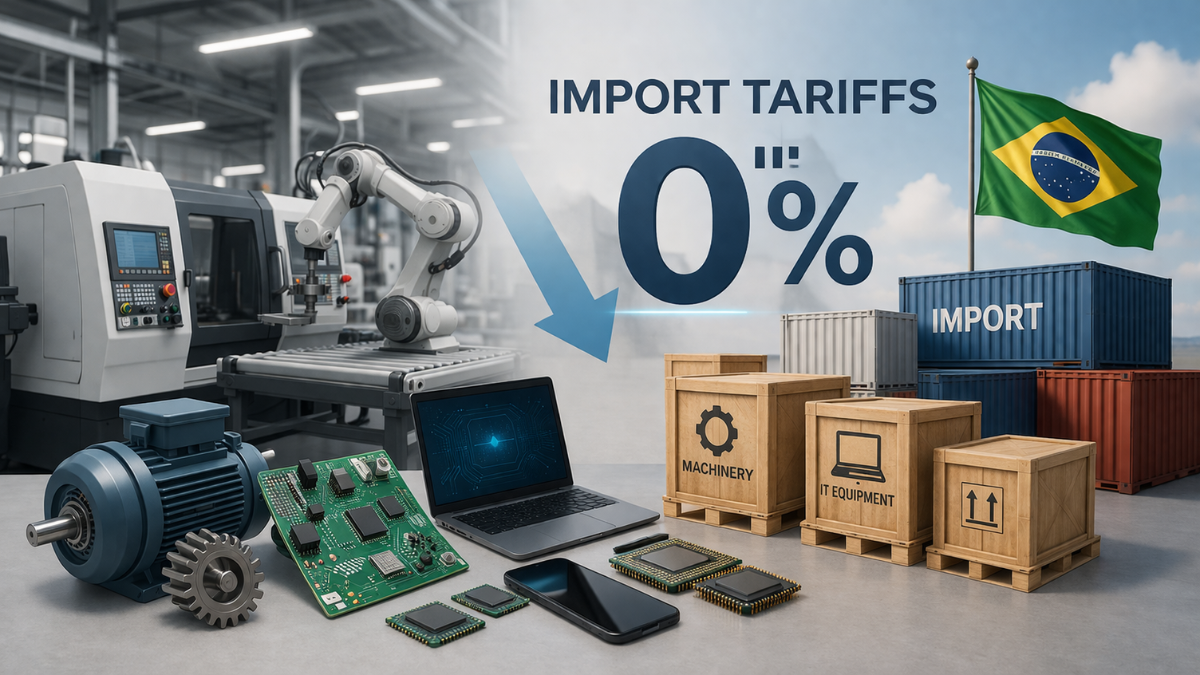


Brazil has taken a major step to support its industries by cutting import tariffs to zero on a wide range of goods. The decision was made by the Foreign Trade Chamber (Camex) during a meeting held on March 26.
The move applies to around 200 items, including capital goods, machinery, equipment used in production, and information technology products. These are essential items that many industries depend on to maintain operations and ensure smooth production processes.
Out of the total changes, tariffs were reduced to zero on 970 products. However, 779 of these already had exemptions in place earlier, and these exemptions were simply renewed as part of a routine decision. The main change comes from the remaining 191 items, which were part of a larger group of over 1,200 electronic products that had their import taxes increased earlier in February.
That earlier decision had affected items such as smartphones, electronic components, and other IT-related products. Now, the government has reversed part of that move by removing tariffs on these 191 goods for a temporary period of four months. Before this, tariffs had already been eliminated on 105 similar items in February. This step is aimed at reducing the burden on industries that rely heavily on imported technology and machinery.
Decision Based on Technical Review and Industry Requests
The government clarified that the tariff reduction was based on technical criteria and detailed evaluations conducted by the Ministry of Development, Industry, Trade and Services. The decision followed multiple requests from companies that highlighted challenges in sourcing certain products within Brazil.
China warns retaliation over Mexico’s tariff hikes affecting $30 billion in exports
According to these companies, many of the affected goods are either not produced domestically or are not available in sufficient quantities to meet market demand. As a result, industries faced difficulties in maintaining production without relying on imports.
After receiving these requests, the government carried out a careful review process for each item. This process allows authorities up to four months to make a final decision, during which they assess whether domestic production exists or if imports are necessary to fill supply gaps.
The period for submitting new requests remains open until March 30, allowing more companies to apply for tariff reductions on additional products. This ongoing review mechanism ensures that industries can continue to access essential materials and equipment without facing shortages or delays.
Other Sectors Included in the Tariff Cuts
The tariff cuts extend beyond industrial and IT goods and include several other important sectors. Medicines used to treat serious conditions such as diabetes, Alzheimer’s disease, Parkinson’s disease, and schizophrenia have been added to the zero-tariff list, helping improve access to essential healthcare products.
In addition, agricultural inputs like fungicides and insecticides have been included, which are crucial for maintaining crop health and supporting food production. The list also covers items used in the textile industry, hospital nutrition products, and even hops used in beer production, reflecting the wide scope of the decision.
Malaysia becomes first country to cancel US tariff deal after legal ruling
Anti-Dumping Measures Introduced to Protect Local Industry
At the same time, the government has introduced measures to protect domestic industries through anti-dumping duties. These duties will remain in place for five years on certain imported products.
Ethanolamines, which are chemicals used in cosmetics such as hair dyes and straightening products, will face these duties when imported from China. Similarly, polyethylene resins, a widely used type of plastic, will be subject to duties when imported from the United States and Canada.
Anti-dumping duties are applied when imported goods are sold at very low prices, sometimes even below their production cost, which can harm local manufacturers. This practice is regulated under international trade rules established by the World Trade Organization.
In the case of polyethylene, the government decided to maintain the surcharge at the same provisional levels that had been in effect over the past six months. This approach ensures that there is no additional cost impact on industries that rely on this material, including those involved in producing packaging, toys, and various industrial goods.
The combined measures are intended to reduce production costs, ease inflationary pressures, and prevent supply bottlenecks, while also ensuring that domestic industries are protected from unfair competition.