

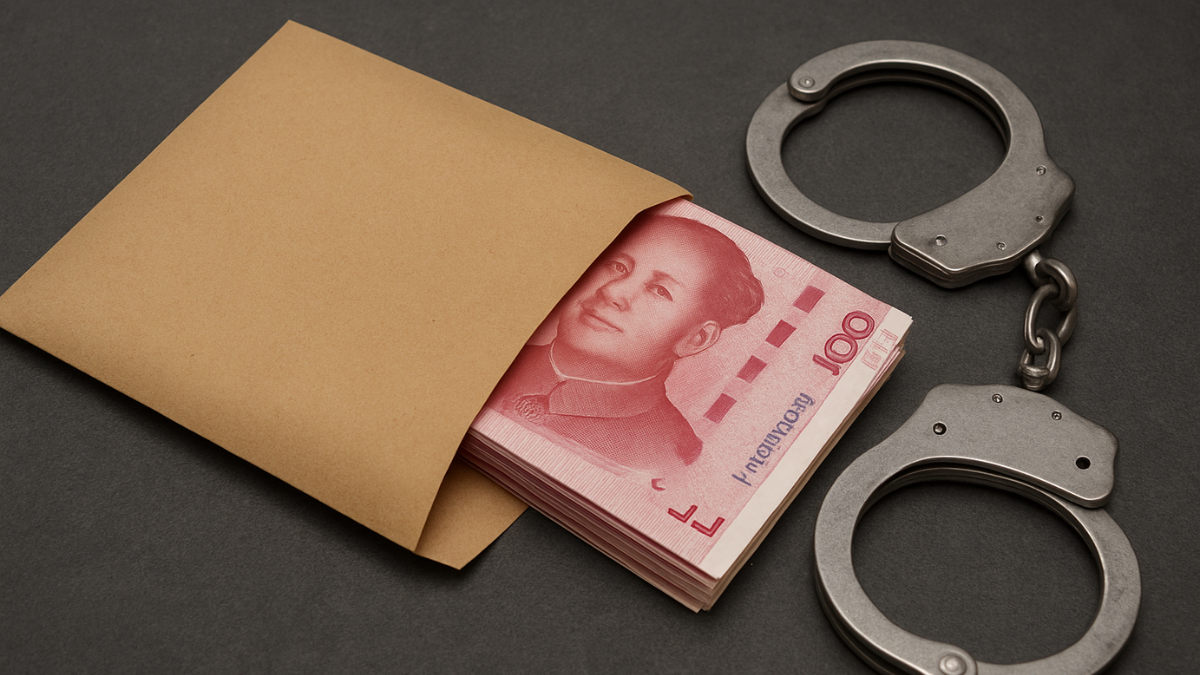


China has executed Bai Tianhui, a former general manager of China Huarong International Holdings, after he was found guilty of accepting huge bribes. State broadcaster CCTV reported that Bai took 1.1 billion yuan, equal to about 156 million US dollars, over several years. The case drew strong attention because of the enormous amount involved and the senior position Bai held.
China Huarong was once one of the country’s biggest managers of bad debt. It was created to help deal with risky loans collected from state-owned banks. Over time, it expanded into many financial areas, including offshore operations. However, it later faced several major corruption scandals and was taken over by Citic Group in 2021. After the rescue, the company was renamed China CITIC Financial Asset Management.
Bai worked in powerful roles at two important offshore units: Huarong International Financial Holdings Ltd (Hong Kong) and China Huarong International Holdings Ltd. According to CCTV, he used his authority between 2014 and 2018 to accept illegal money and valuable assets. Reports said the amount he received was “particularly huge” and caused harm to the interests of the state and the public.
How the investigation and court process unfolded
The investigation into Bai’s activities began during China’s wider push to clean up corruption in the financial sector. Prosecutors said Bai accepted large sums in exchange for helping certain partners or approving business deals. Because the amounts were so large, the case was reviewed by higher-level courts.
In May 2024, a court in Tianjin sentenced Bai to death after finding clear evidence of bribery. The ruling stated that Bai had misused his position and created serious financial risks. He appealed the decision, but the higher court upheld the original sentence. The case then went to the Supreme People’s Court, which approved the death sentence in February.
CCTV announced that Bai’s execution was carried out on Tuesday. His family could not be reached for comment, and no personal statements from them were shared publicly. Chinese reports focused only on the case details and the legal proceedings.
Bai’s execution comes four years after another major case involving the same company. In 2021, Lai Xiaomin, the former chairman of China Huarong, was executed after being found guilty of receiving or seeking 1.79 billion yuan in bribes. Lai’s case was one of the biggest corruption scandals in China’s financial system, and Bai’s case has been compared to it because of the scale and severity.
A continued anti-corruption drive in the financial sector
Bai Tianhui’s execution is part of China’s ongoing campaign against corruption, especially in the financial industry. In recent years, the government has focused on banks, insurance firms, investment groups, and regulatory bodies to prevent the misuse of power. Officials have said that corruption in finance can create widespread risks and damage the country’s economic stability.
Offshore units like the ones Bai worked for play a major role in raising money and managing international financial operations. Misconduct in these areas can affect both domestic markets and foreign investors. This is why the authorities have been strict in cases involving overseas finance.
State media described Bai’s actions as “particularly pernicious” and said they had a strong negative impact on society. The case also highlighted how corruption inside powerful financial companies can go unnoticed for years if oversight is weak.
China Huarong’s background and scale of the bribery
China Huarong was created as a bad-debt manager to help clean up China’s banking system. The company later expanded into international finance and major investment operations. Bai’s roles in the Hong Kong-based branches gave him access to large financial decisions and partnerships.
Between 2014 and 2018, Bai accepted illegal payments and assets from people seeking special treatment or approval for deals. CCTV reported that these actions caused serious losses, though detailed figures were not made public. Authorities said the social and financial impact was severe enough to warrant the strongest legal punishment.