

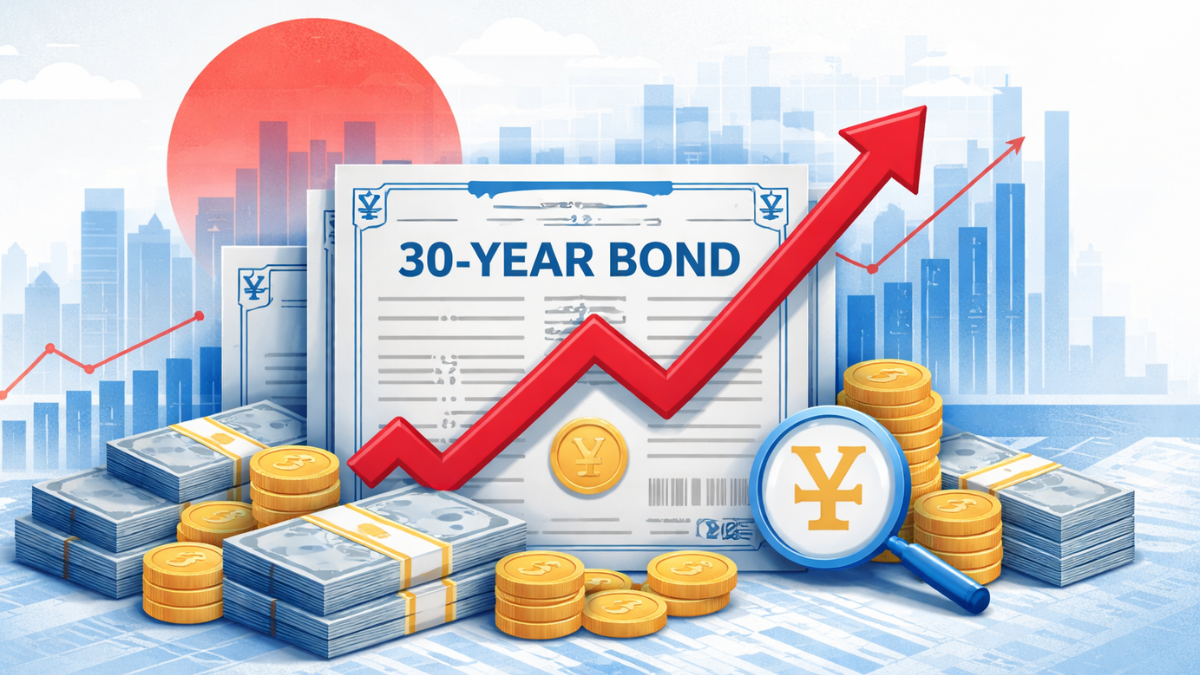


Japan has sold government bonds worth ¥450.4 billion with a maturity period of 30 years. This means the country has borrowed money from investors and promised to repay it after three decades.
These bonds come with a yield of 3.697%. In simple terms, this is the return investors will earn each year for holding these bonds. The yield is an important number because it shows how much interest the government must pay to borrow money.
Government bonds are often seen as safe investments. Investors such as banks, insurance companies, and large institutions usually buy them. In return, they expect steady income over a long period.
This particular bond sale is drawing attention because of the high yield. Japan has been known for very low interest rates for many years. So, a yield close to 3.7% is considered significant in the country’s financial market.
The amount raised, ¥450.4 billion, shows that there is still demand for long-term Japanese debt. However, the yield level tells a deeper story about the market conditions.
Why the 3.697% Yield Is Important
The yield of 3.697% is one of the key highlights of this bond sale. It shows that investors are asking for higher returns compared to the past.
Japan weighs lower buybacks of inflation-linked bonds as market demand strengthens
For many years, Japan had extremely low bond yields. In some cases, yields were close to zero. This was due to policies that aimed to support economic growth and keep borrowing costs low.
Now, a higher yield suggests that the situation is changing. Investors want more reward for lending money over such a long period. A 30-year bond carries more risk because it locks money for a very long time.
When yields go up, it often means borrowing becomes more expensive for the government. This is because the government has to pay higher interest to attract buyers.
The yield also reflects how investors feel about the economy. If they see more risk or uncertainty, they demand higher returns. This helps protect their investment over time.
In this case, the 3.697% yield shows that market expectations are shifting. It signals that long-term borrowing is no longer as cheap as it used to be in Japan.
What This Bond Sale Reveals About Market Conditions
This bond auction provides insight into current financial conditions in Japan. It shows how the government is managing its borrowing needs and how investors are responding.
Chinese government bonds attract demand as global markets react to inflation fears
Japan has one of the largest levels of government debt in the world. Because of this, bond sales are a regular and important part of its financial system. The government relies on these sales to fund spending and manage its economy.
The latest sale indicates that investors are still willing to lend money to Japan. However, they are doing so at higher interest rates than before.
The demand for long-term bonds like the 30-year one can sometimes be weaker compared to shorter-term bonds. This is because long-term investments carry more uncertainty. Changes in inflation, interest rates, and the economy can affect returns over time.
The higher yield in this sale reflects these concerns. It shows that investors are being more cautious and are adjusting their expectations.
At the same time, the successful sale means that the government was able to raise the required funds. This is important for maintaining financial stability.
Bond yields are also closely watched because they influence other parts of the economy. They can affect loan rates, savings returns, and overall financial conditions.
In this case, the 30-year bond yield reaching 3.697% highlights a shift in long-term interest rates. It shows how the market is reacting to changing economic conditions without altering the basic structure of government borrowing.