

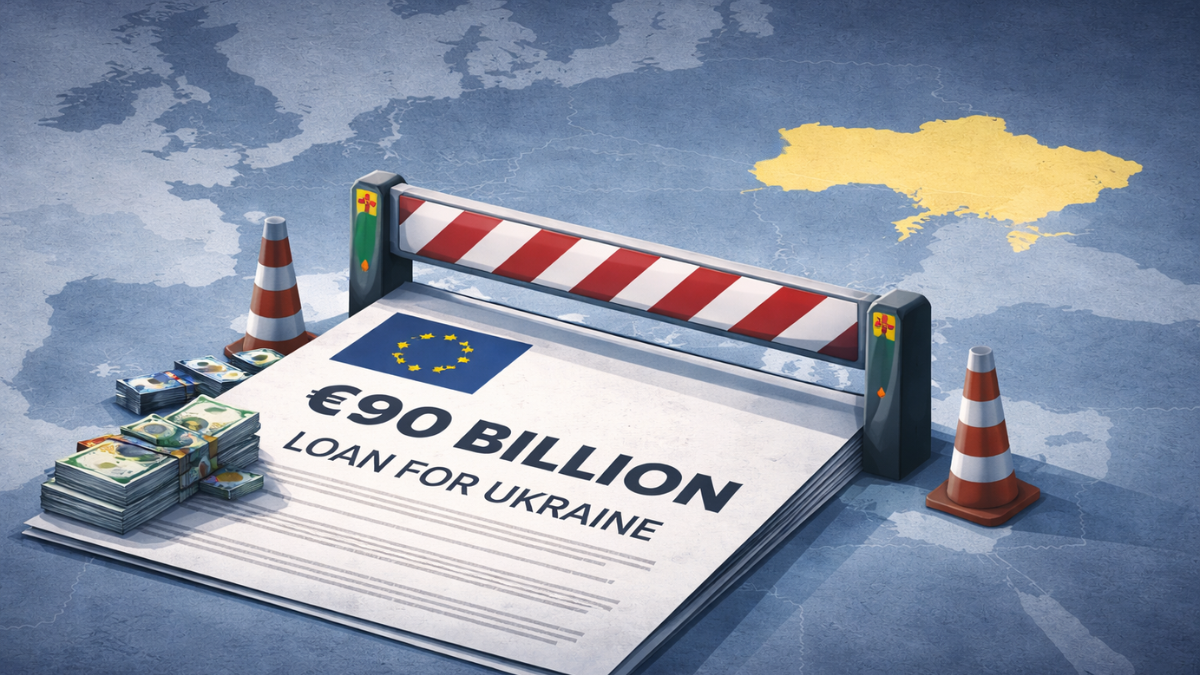


The European Union has hit a major obstacle while trying to deliver a €90 billion financial support package to Ukraine. The plan, agreed in December 2025, was expected to start releasing funds in April. However, leaders failed to finalize the deal during a March summit in Brussels.
The delay is due to opposition from Hungary. Under EU rules, certain financial decisions require unanimous approval from all member states. This means a single country can block the entire process.
The loan is intended to support Ukraine during the ongoing war. It aims to help maintain government operations, stabilize the economy, and support essential services. The funding is planned for 2026 and 2027, forming a key part of Ukraine’s financial resilience.
EU leaders had also called on international partners outside the bloc to contribute to Ukraine’s financial needs. The broader goal was to ensure that Ukraine has enough resources to manage wartime challenges.
European Commission President Ursula von der Leyen said that the EU would “find ways” to ensure the funds still reach Ukraine despite the current blockage.
Political Tensions Complicate Financial Support
The disagreement is not only about financial support. Hungary, led by Prime Minister Viktor Orbán, has linked its opposition to issues involving energy supplies. A key concern is the Druzhba oil pipeline route through Ukraine, which has faced disruptions earlier this year.
Sweden opposes EU proposal on congestion revenues, considers export restrictions
This has turned the financial package into part of a wider political dispute. The issue now involves energy security, sanctions, and internal EU unity. What was expected to be a technical approval process has become a complex political challenge.
During the summit, several leaders expressed frustration. European Council President António Costa described Hungary’s position as unacceptable. German Chancellor Friedrich Merz also criticized the move, saying it damaged the credibility of the European Union.
The situation highlights a key issue within the EU system. While most countries strongly support Ukraine, the requirement for unanimous decisions can slow down action. This delay comes at a sensitive time when quick responses are needed.
At the same time, EU leaders have maintained their stance on the conflict. They continue to call for a full and immediate ceasefire and stress that Ukraine’s sovereignty and territorial integrity must be respected. However, the disagreement over funding shows that political unity does not always lead to quick decisions.
The deadlock also affected the wider agenda of the summit. Leaders had planned to discuss other major topics such as global conflicts, defence, migration, and economic strategy. Instead, the Ukraine loan issue dominated discussions.
Australia backs EU sanctions targeting cyber attacks linked to Chinese and Iranian entities
Brussels Looks for Alternative Solutions
With the original plan blocked, the European Commission is now working on alternative ways to deliver the financial support. The aim is to ensure Ukraine still receives the promised funds without further delay.
The challenge lies in the legal structure of the package. Parts of the plan require unanimous approval because they involve the EU’s long-term budget and borrowing capacity. This makes it difficult to proceed under the current framework.
Officials are now exploring options that could bypass this requirement while preserving the full value of the support. Any new approach must still meet legal rules and deliver the same financial strength.
Ukraine has made it clear that the funding is urgently needed. President Volodymyr Zelenskyy told EU leaders that the country’s financial situation remains difficult. He stressed that timely support is essential to maintain stability during the war.
Delays in funding could affect public services and economic resilience in Ukraine. The situation shows how internal disagreements within the EU can have real-world consequences.
For now, the original €90 billion loan package remains stalled. Discussions are ongoing as Brussels works to find a solution that can ensure the support reaches Ukraine as planned.