

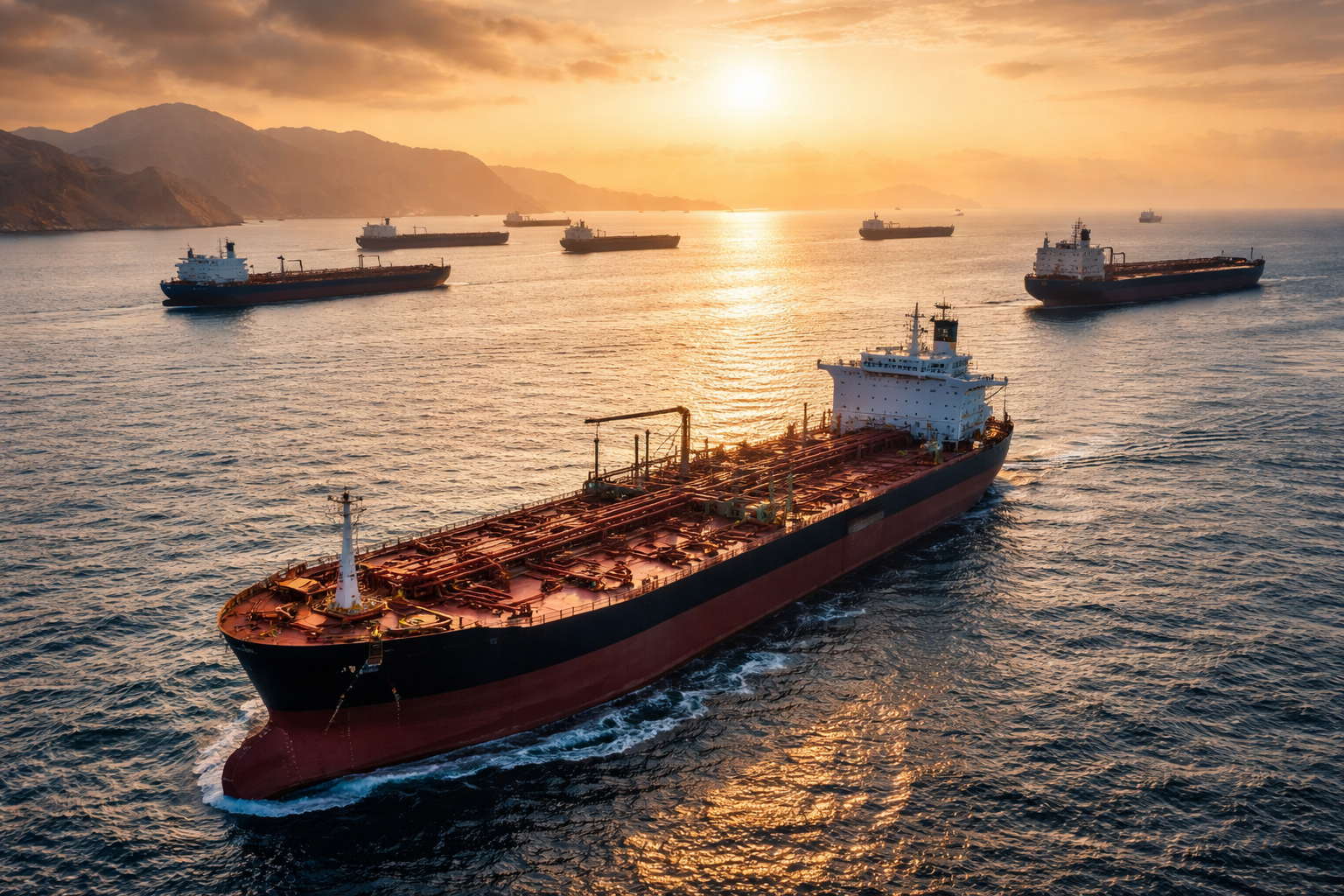


Marine insurers have begun cancelling existing policies and increasing war risk premiums for ships operating in the Gulf and the Strait of Hormuz following military strikes involving the United States, Israel and Iran.
The move reflects rising concern within global shipping and insurance markets about the safety of vessels transiting one of the world’s most strategically important oil routes.
War Risk Insurance Premiums Set to Rise Sharply
Insurance brokers confirmed that war risk underwriters issued cancellation notices on Saturday for vessels trading through the region. The unusual timing — before the start of the new trading week — signals the urgency with which insurers are reassessing exposure.
Prior to the latest escalation, war risk premiums for ships moving through the Gulf were typically around 0.25% of a vessel’s insured value. Brokers now indicate that those premiums could increase by as much as 50% in the coming days.
For a vessel insured at $100 million, that would raise the cost of coverage for a single voyage from approximately $250,000 to about $375,000.
Sanctions couldn’t stop it: the hidden global property network tied to Iran’s top leadership
Premiums for ships calling at Israeli ports are also expected to rise from previous levels of roughly 0.1% of vessel value, as insurers factor in the possibility of further retaliatory action.
Industry sources emphasize that cancellation notices are part of a standard process during heightened geopolitical risk. After cancelling existing terms, insurers typically renegotiate coverage at revised — and often higher — rates. The objective is to reflect the updated security environment rather than to withdraw protection entirely.
Strait of Hormuz Remains Critical to Global Oil Supply
The Strait of Hormuz is one of the most vital maritime chokepoints in the world. Around one-fifth of global crude oil exports pass through the narrow waterway, which connects the Persian Gulf to international markets.
Because of its strategic importance, any increase in risk levels in the region immediately affects shipping, insurance pricing and global energy markets.
Underwriters are closely monitoring whether the situation could lead to disruption of commercial shipping. Concerns include the possibility of vessel seizures, harassment, or other interference in the waterway. Insurers are adjusting premiums to account for these potential risks.
U.S. sanctions blow puts India’s $120 million Chabahar Port project in jeopardy
Maritime advisory firm EOS Risk said some vessels had received radio communications warning that the strait was closed. However, there has been no confirmed official closure of the waterway.
Despite that, shipping activity has already shown signs of caution. On Saturday, at least three vessels reportedly altered course rather than proceed through the strait. Shipowners are conducting risk assessments as they evaluate both insurance costs and operational security.
Impact on Shipping Costs and Energy Markets
Rising war risk premiums increase the overall cost of transporting crude oil and other commodities through the region. These added costs are typically absorbed initially by shipowners or charterers but can eventually flow through to traders and buyers.
Cargo war risk insurers — who provide coverage for commodities such as oil and grain — are also preparing to review and potentially cancel existing policies before renegotiating terms.
The escalation comes at a time when global energy markets remain sensitive to supply disruptions. Even without a formal closure of the Strait of Hormuz, higher insurance costs can influence freight rates and shipping decisions.
Shipping companies now face difficult choices. Continuing transit through the Gulf means paying higher premiums and operating under elevated risk conditions. Diverting vessels avoids the immediate security concerns but can extend voyage times and increase fuel costs.
For now, the Strait of Hormuz remains open, and commercial traffic continues. However, the insurance market’s rapid response underscores how quickly geopolitical tensions can translate into higher costs for global trade.
Iranian Revolutionary Guards Raid, Seize Vessel Linked to Eyal Ofer
Industry participants are closely watching developments in the region as they prepare for potential further adjustments in pricing and coverage conditions.