

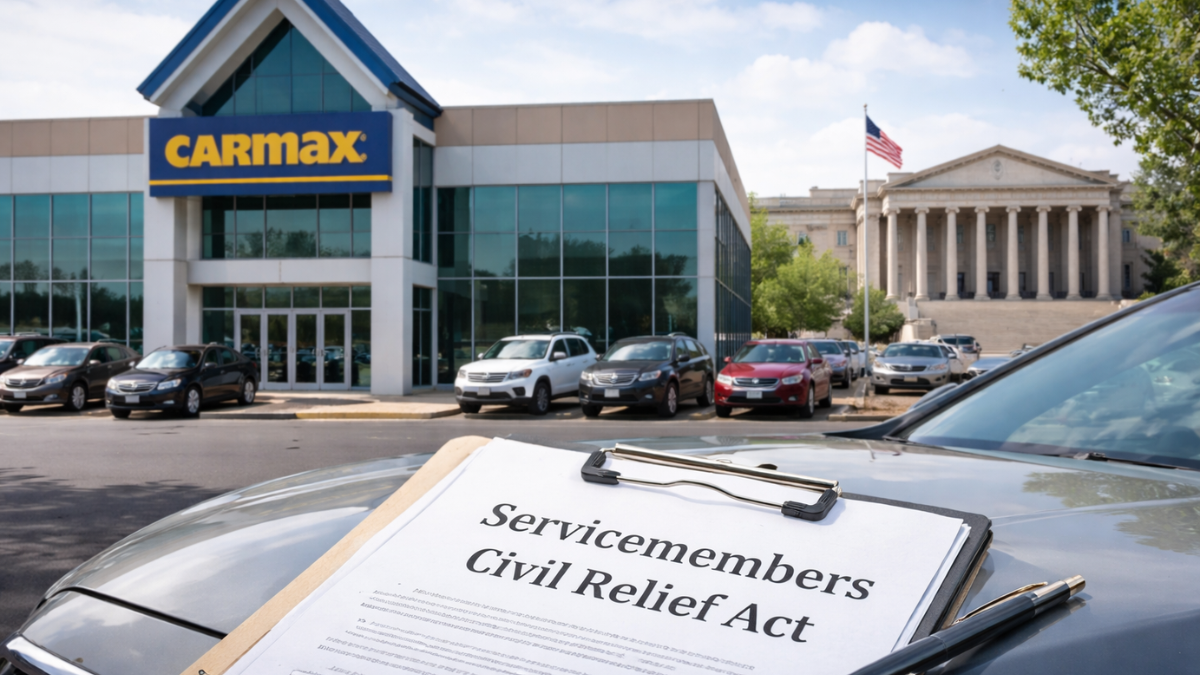


The case centers on claims that CarMax violated the Servicemembers Civil Relief Act, also known as the SCRA. This federal law protects members of the U.S. military from certain financial and legal actions while they are serving the country.
According to the Justice Department, CarMax repossessed vehicles owned by servicemembers without first getting a required court order. Federal law clearly states that businesses must obtain a court order before taking back a vehicle from a servicemember who is protected under the SCRA.
As part of the announcement, Assistant Attorney General Harmeet K. Dhillon of the Justice Department’s Civil Rights Division stated that federal law prohibits businesses from repossessing service members’ vehicles without a court order. The department emphasized that it remains committed to defending the rights of those serving in the military and to enforcing the laws designed to protect them.
The settlement requires CarMax to pay at least $420,000 in damages to affected servicemembers. In addition, the company will pay a civil penalty of $79,380 to the United States government.
ECB exposes 21 quarters of risk misreporting at J.P. Morgan, issues €12 million fine
The total amount comes to nearly half a million dollars.
What the Law Says About Military Protections
The Servicemembers Civil Relief Act is designed to protect military members and their families from financial harm during active duty. Service members often face sudden deployments, relocations, and changes in income. The law helps ensure that they are not unfairly treated during this time.
Under the SCRA, an auto finance or leasing company cannot repossess a servicemember’s vehicle without first obtaining a court order. This rule applies as long as the servicemember made at least one payment on the vehicle before entering military service.
For members of a reserve component, these protections begin when they receive orders to report for active duty. This means that even before they officially begin active service, they are protected under the law.
The Justice Department alleges that CarMax failed to follow these rules. The company is accused of repossessing vehicles without obtaining court approval. In some cases, vehicles were allegedly taken even after owners informed CarMax that they were in military service.
The department also claims that CarMax did not extend proper SCRA protections to reservists who had received orders to report for active duty.
These actions, according to the allegations, violated federal law.
Enforcement Actions and Compensation
As part of the agreement, CarMax must compensate servicemembers who were harmed. The company will pay at least $420,000 directly to affected individuals. These payments are meant to address the financial damage caused by the unlawful repossessions.
KPMG partner fined $10,000 after using AI to cheat on AI ethics exam
In addition to compensating servicemembers, CarMax must pay a civil penalty of $79,380 to the federal government.
The settlement also requires CarMax to revise its policies and procedures. The company must make changes to ensure that the rights of U.S. servicemembers are protected moving forward. These changes are intended to prevent similar violations from happening again.
The case was handled by the Civil Rights Division’s Housing and Civil Enforcement Section and the U.S. Attorney’s Office for the Eastern District of Virginia.
The Justice Department has been actively enforcing the Servicemembers Civil Relief Act for many years. Since 2011, the department has obtained more than $484 million in monetary relief for over 149,000 servicemembers through SCRA enforcement efforts.
Servicemembers and their dependents who believe their rights under the Servicemembers Civil Relief Act may have been violated are encouraged to contact the nearest Armed Forces Legal Assistance Program Office. Locations for these offices are available online through official military legal assistance resources.
This settlement highlights federal enforcement of the Servicemembers Civil Relief Act and the legal protections in place for members of the U.S. military.