

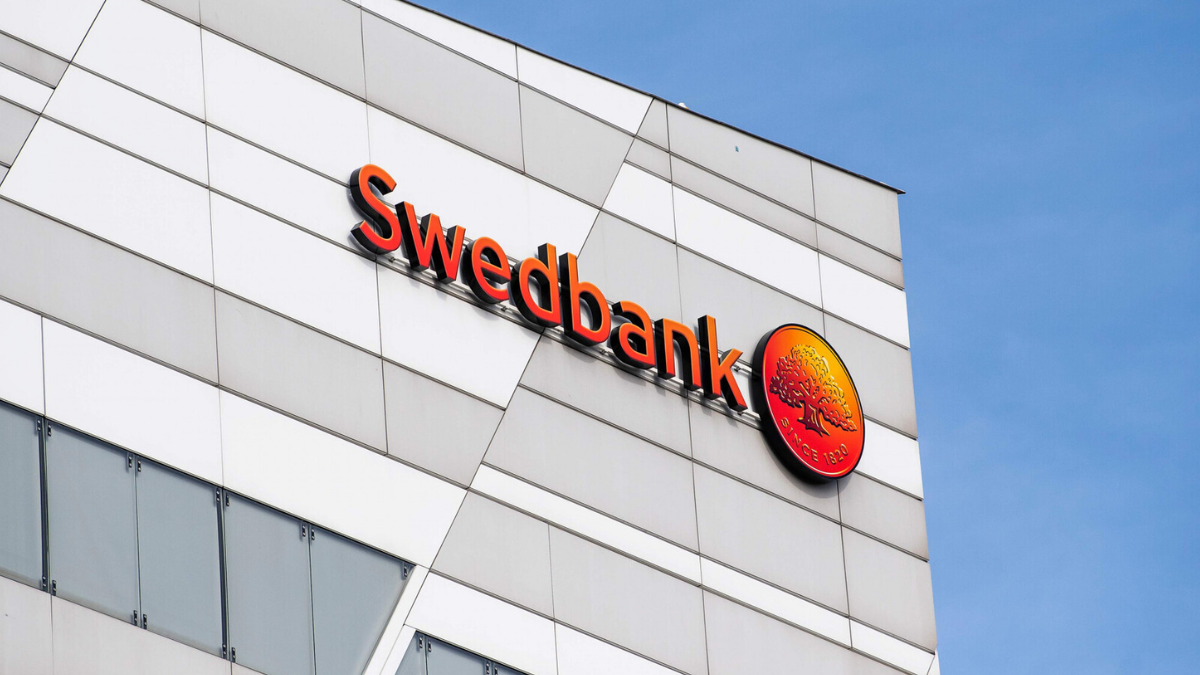


Sweden’s Financial Supervisory Authority (FSA) announced on Friday that it will investigate whether Swedbank, one of Sweden’s largest banks, followed the country’s anti-money-laundering rules properly. The focus is on the bank’s customer checks and due diligence measures. The investigation period covers December 2023 to November 2025.
The FSA is Sweden’s main financial regulator, responsible for supervising banks, insurance companies, and other financial institutions to ensure they follow the law and maintain financial stability.
The FSA said that monitoring how banks handle risks related to money laundering and terrorist financing is a top priority in 2026. This highlights the Swedish authorities’ ongoing commitment to ensuring that financial institutions maintain strong safeguards against illegal financial activities. The FSA did not clarify whether the investigation is a routine oversight measure or prompted by specific suspicions of wrongdoing.
Swedbank referred all questions about the investigation back to the FSA. This comes shortly after the conclusion of a U.S. Department of Justice (DOJ) investigation, which looked into alleged money laundering linked to the bank but was closed in January without imposing any fines. The announcement from the FSA adds a new chapter to Swedbank’s history of scrutiny over compliance and financial oversight.
ECB exposes 21 quarters of risk misreporting at J.P. Morgan, issues €12 million fine
Background on Swedbank and Past Investigations
Swedbank is the largest mortgage lender in Sweden and has faced regulatory scrutiny before. The bank was involved in a significant money-laundering scandal connected to the Baltic region. This scandal first came to light during a major investigation at Danske Bank, which exposed weaknesses in how Nordic banks were monitoring transactions from the Baltic states.
The U.S. Department of Justice investigation focused on Swedbank’s involvement in this Baltic money-laundering issue. Although the DOJ concluded its probe without imposing any penalties, concerns remain about the bank’s internal controls, risk management procedures, and due diligence measures. Regulators in Sweden want to ensure that Swedbank is fully compliant with national standards and that similar risks are mitigated in the future.
The new FSA investigation will examine all customer verification processes, the bank’s anti-money-laundering protocols, and its adherence to Swedish regulatory standards between December 2023 and November 2025. The scrutiny reflects the continued attention Nordic banks are receiving due to past high-profile scandals and underscores the importance of compliance for large financial institutions.
KPMG partner fined $10,000 after using AI to cheat on AI ethics exam
Market Reaction and Regulatory Focus
Following the FSA announcement, Swedbank’s shares fell by 1.3% at 0845 GMT. This movement occurred while the broader European banking index rose by 0.4%, indicating that Swedbank underperformed compared to its peers. Investors appear cautious as regulators continue to monitor the bank’s operations closely.
The FSA emphasized that countering money laundering and terrorist financing is a top priority in 2026. The investigation will likely assess the bank’s internal reporting systems, staff training on compliance matters, and procedures for identifying suspicious transactions. It also highlights the regulators’ determination to ensure that Swedish banks uphold high standards for financial integrity and transparency.
Swedbank’s case serves as an example of ongoing oversight in the banking sector, particularly for institutions with international exposure and previous compliance issues. The investigation is expected to provide a thorough review of the bank’s procedures and policies during the specified two-year period, ensuring that customer due diligence and risk management practices meet regulatory expectations.
Overall, the FSA’s probe into Swedbank adds to the heightened attention on Nordic banks following past money-laundering scandals. The focus is on ensuring that proper controls are in place to prevent illicit financial activities, and the investigation marks an important step in Sweden’s ongoing efforts to maintain the integrity of its financial system.