

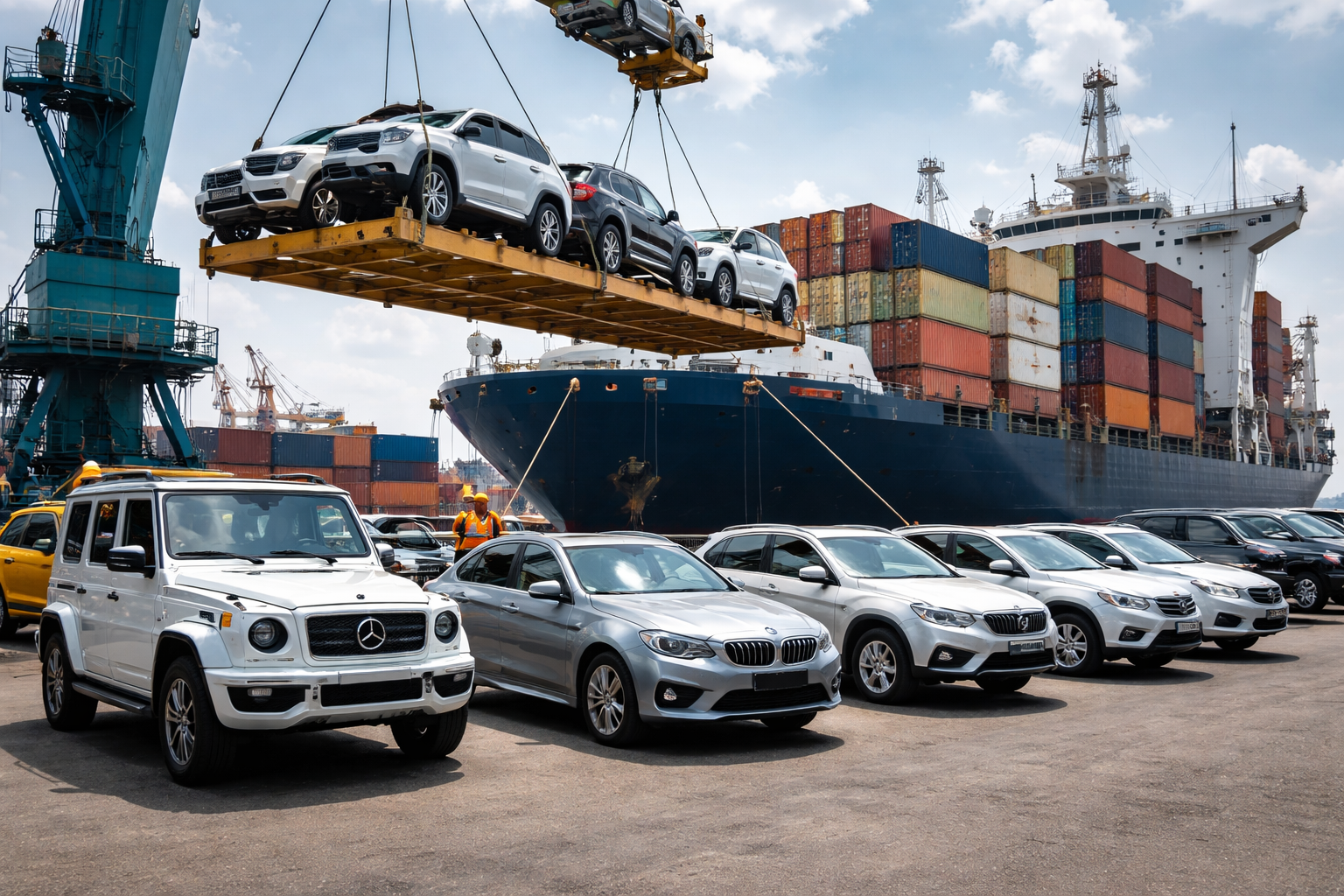


Tens of thousands of Western cars are finding their way into Russia through China, despite sanctions and automakers’ promises to stop sales after Russia’s invasion of Ukraine in 2022. This growing trade involves Western cars from top brands like Toyota, Mazda, BMW, Mercedes, and Volkswagen, showing how informal networks are helping Russian dealers bypass restrictions.
Chinese Market Fuels Western Cars Trade to Russia
Most of these vehicles are either made in China, where global brands produce cars with local partners, or they pass through China after being built elsewhere. A growing trend is “zero-mileage used cars,” which are essentially brand-new vehicles first registered in China and then reclassified as used before being sent to Russia. This allows traders to bypass restrictions while still selling them at prices close to brand-new models in Russia.
The trade has expanded quickly, driven by China’s highly competitive and heavily subsidized car market. Automakers and dealers often get financial incentives for selling cars domestically or exporting them, creating chances for traders to move surplus Western cars to Russia.
Despite sanctions, Western cars continue flowing into Russia through China
Data from Russian research firm Autostat shows that sales of Western cars in Russia through Chinese channels have doubled since 2023. This highlights how China has become a major route for Western cars entering Russia despite international sanctions.
How the Gray-Market Car Trade Works
Russian dealerships are tapping into networks of Chinese intermediaries to acquire Western cars that would otherwise be unavailable due to sanctions. Dealers often buy vehicles one by one from traders in China to meet specific customer orders. The process is complex, involving multiple middlemen who connect Chinese sellers with Russian buyers.
Zero-mileage used Western cars play a central role in this system. In China, dealers sell them at discounted prices, but in Russia, these same vehicles command almost the same price as brand-new models. The cars may carry badges from Toyota, Mazda, BMW, Mercedes, Volkswagen, Audi, Porsche, and Skoda, appealing to Russian buyers who prefer Western cars.
Venezuela reassures China after reports US sought to cap oil prices near $50 a barrel
Autostat’s data shows nearly 130,000 vehicles from sanctioned countries were sold in Russia in 2025. Of these, almost half were manufactured in China. Notably, Toyota and Mazda sold tens of thousands of Western cars through these channels, even though the companies themselves officially stopped exports to Russia. Similarly, German luxury brands, including Mercedes and BMW, saw tens of thousands of Western cars registered in Russia, with many manufactured in China or routed through it.
The Mercedes G-Class, a high-end off-road Western car made only in Austria, is among the most sought-after cars. Shipping documents show that luxury SUVs like the Mercedes GLC 300 and BMW X1 xDrive25i are making their way from China into Russia, bypassing formal distribution channels.
Automakers and Sanctions Struggle to Keep Up
Automakers from Europe, Japan, and South Korea have publicly prohibited sales to Russia and are trying to prevent unauthorized exports. However, tracking the gray-market trade is extremely difficult. Investigations require time, cooperation from multiple parties, and access to different markets, making enforcement challenging.
BMW instructed its China operations to block exports to Russia, but any vehicles entering outside authorized channels happen against the company’s will. Similarly, Toyota and Mazda confirm they do not export new cars to Russia, yet Chinese registration and trading practices allow these vehicles to reach Russian buyers.
China lowers tariffs on EU dairy imports after 18-month investigation
Government authorities are aware of the issue. Customs departments in Germany and South Korea investigate potential sanctions violations and try to stop indirect exports of Western cars to Russia. Japan warns domestic businesses that sending cars to China for resale in Russia could breach sanctions. Meanwhile, China and Russia oppose unilateral sanctions and have not commented on the trade.
Autostat data shows China has become the main conduit for Western cars entering Russia. Despite sanctions, the high volume of Western cars moving through gray-market channels means restricted vehicles continue to reach Russian consumers, from Japanese models to high-end German SUVs.