

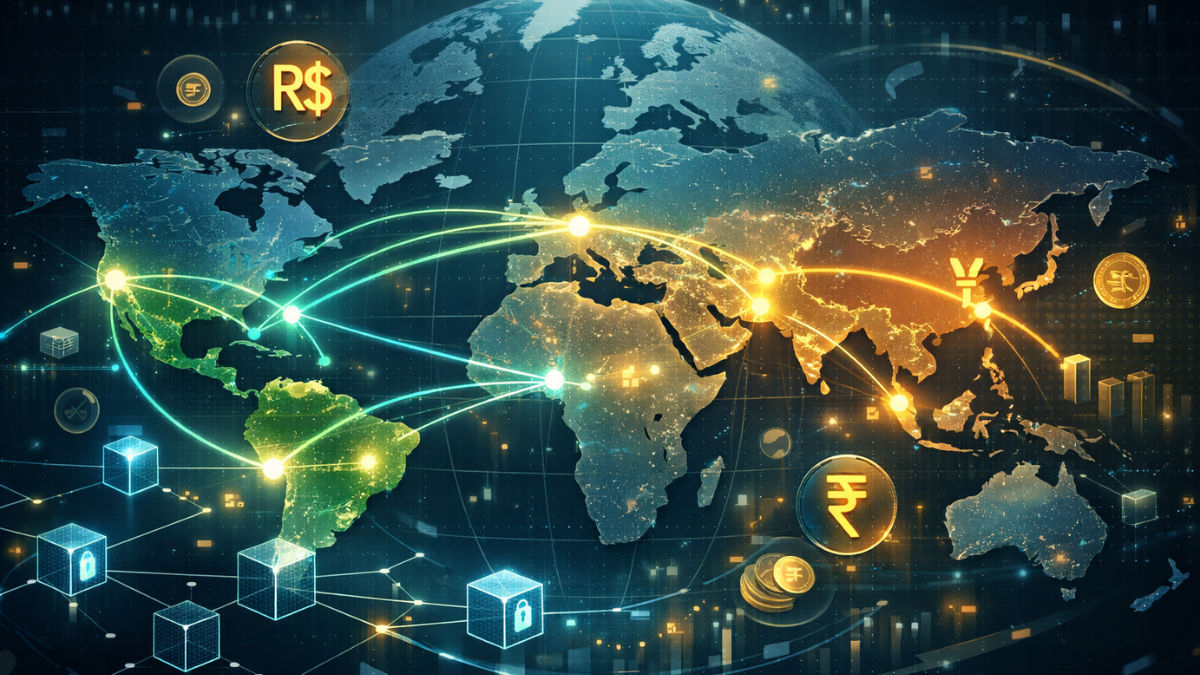


A major economic bloc made up of emerging economies has begun operating a new international payment system inspired by Brazil’s instant transfer model. The move is part of a broader effort to reduce dependence on Western financial systems and the US dollar. In 2026, the project entered a decisive phase, connecting central banks and financial institutions from countries such as China, India, Egypt, and the United Arab Emirates.
The platform was officially presented in mid-2025 in Russia. Since then, technical and diplomatic work has accelerated, especially as Brazil currently holds the rotating presidency of the bloc. The main goal is to create a safe and efficient way to pay for foreign trade without relying on systems influenced by Western powers.
By allowing countries to trade directly in their own currencies, the new system avoids forced conversions into the US dollar. This reduces exposure to exchange rate swings and external restrictions. It also lowers costs by removing traditional international banking intermediaries that often slow down and increase the price of transactions.
Brazilian Payment Technology at the Core
The system, known as BRICS Pay, is based on the instant payment technology developed by the Banco Central do Brasil. In Brazil, this model transformed daily payments by enabling fast, low-cost transfers available at all hours. The system handled trillions of reais in transactions and gained wide public acceptance.
This success became the main technical reference for the bloc. Engineers and economists adapted the Brazilian experience to an international scale. The result is a platform designed to process large volumes of data and complete settlements in real time, regardless of time zones or distance.
For exporters and importers, this speed is especially important. Sectors such as agribusiness and commodities depend on quick payments and tight margins. Instant settlement helps businesses manage cash flow and reduce risks in a volatile global market.
The platform also supports payments in local currencies. This removes the need for double conversions and lowers transaction costs. Researchers from Fundação Getulio Vargas have noted that exporting this payment know-how places Brazil in a position of technological leadership within the bloc.
Decentralized Structure and Global Implications
BRICS Pay operates through the Decentralized Cross-border Messaging System, or DCMS. Unlike the SWIFT system, which centralizes transaction data and can be influenced by Western governments, DCMS has no single controlling authority. Transaction validation is shared among member countries, and each nation controls its own network nodes.
Europe moves to cut reliance on Visa and Mastercard amid payment security risks
Blockchain technology is used to ensure records cannot be altered. Tests show the system can process up to 20,000 messages per second, maintaining stability during peak demand. Advanced encryption protects sensitive data from cyber threats, creating a secure environment for governments and businesses.
The network is designed to work even with limited connectivity and does not require mandatory fees. After testing, parts of the system are expected to operate as open source, making it easier for new countries to join.
The initiative has drawn attention from traditional financial centers, particularly in the United States, where the dominance of the dollar has long been a key source of influence. Western sanctions, including asset freezes and payment restrictions, have pushed many countries to seek alternatives.
For Brazil, the system allows direct trade in reais with partners in Asia and the Middle East, improving competitiveness. The platform also supports integration with national digital currencies such as Brazil’s Drex and China’s digital yuan. As more countries join, including Saudi Arabia and Iran, the network expands into key sectors like energy, strengthening trade outside traditional financial channels.