

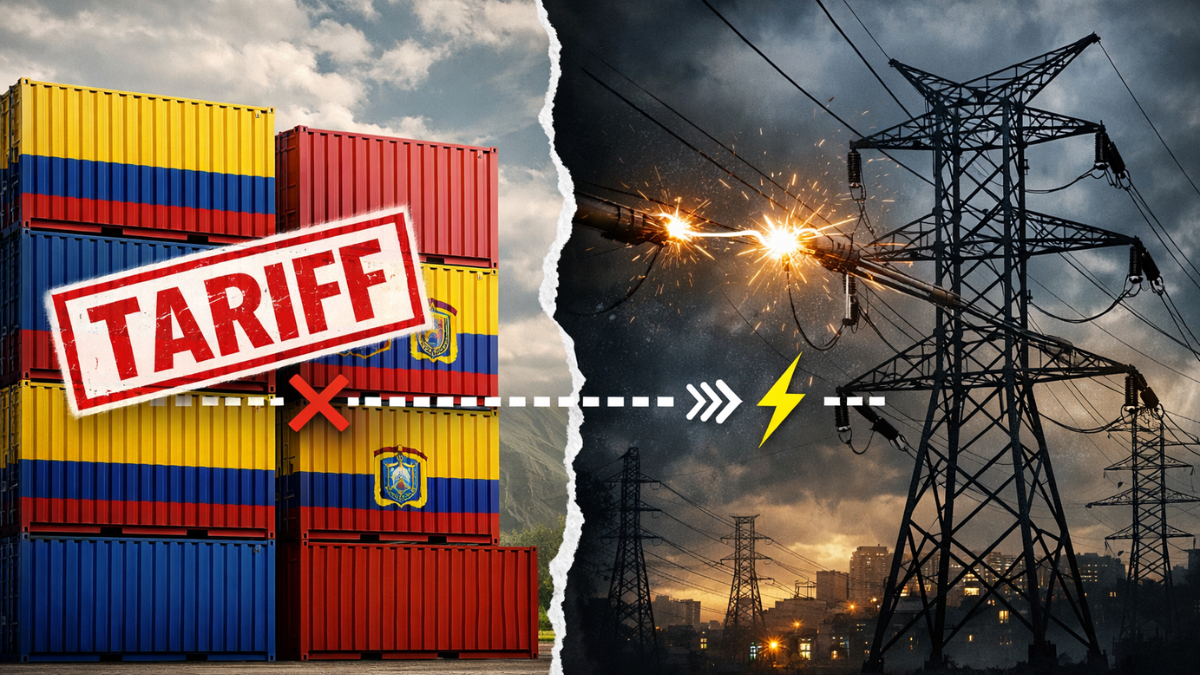


Colombia has suspended electricity sales to Ecuador and imposed new tariffs on imports from its neighbor, escalating a dispute over trade imbalances and drug trafficking cooperation. The move came one day after Ecuador announced a 30% “security charge” on goods imported from Colombia, set to take effect on February 1.
Ecuador’s President Daniel Noboa said the security charge was necessary due to a large trade deficit with Colombia and what Ecuador described as insufficient cooperation in stopping drug traffickers along the shared border. According to Ecuador’s central bank, the trade deficit with Colombia reached $838 million during the first ten months of last year.
Colombia rejected the accusations. In response, the Colombian government announced a 30% tariff on 20 products imported from Ecuador. The commerce and industry ministry said the tariff was proportional, temporary, and subject to review. It stated that the measure was intended to restore balance following Ecuador’s unilateral decision and added that Colombia remained open to dialogue.
While Colombia did not specify which products would be affected, official data shows that Colombia’s leading imports from Ecuador include fish, vegetable oil, and auto parts. During the first 11 months of last year, Colombia exported $1.67 billion worth of goods to Ecuador, accounting for 3.6% of its total exports.
Electricity and Oil Add Pressure to the Dispute
In addition to trade tariffs, Colombia announced it would suspend international electricity transactions with Ecuador. Colombia is a key electricity supplier to its neighbor, making the decision significant for Ecuador’s energy supply.
Greenland talks advance as Trump confirms framework agreement and halts Europe tariffs
The Colombian energy ministry said the suspension was a preventative measure to guarantee domestic electricity supply due to climate variability. Officials stated that exports would resume when adequate technical, energy, and commercial conditions exist. The ministry did not directly link the decision to Ecuador’s trade measures.
Ecuador later clarified that its 30% security charge would not apply to electricity sales or oil logistics services. Despite this exemption, the electricity suspension remained in place.
Following Colombia’s tariff announcement, Ecuador’s energy minister said Colombian crude oil transported through Ecuador’s OCP pipeline would receive “reciprocal” treatment similar to electricity. The OCP pipeline is Ecuador’s second-largest oil transport route. No further details were provided on how this reciprocity would be applied.
Colombia’s Energy Minister Edwin Palma had earlier criticized Ecuador’s actions and canceled a recent initiative that would have allowed private companies to participate in electricity sales between the two countries. This move reduced cooperation in cross-border energy trade.
Drug Trafficking Accusations Intensify Political Strain
The trade and energy dispute is closely linked to accusations over drug trafficking control. Ecuador has accused Colombia of failing to stop traffickers operating across the border. These claims formed part of the justification for the security charge on Colombian imports.
Trump threatens 200% tariffs on French wine after Macron snubs Gaza ‘board of peace’
Colombian President Gustavo Petro strongly denied the allegations. He said cooperation between Colombian and Ecuadorian armed forces was strong and ongoing. Petro stated that Colombia had seized 200 metric tons of cocaine along the shared border and emphasized that Colombia had acted in solidarity when Ecuador requested support.
Petro added that Colombia was willing to expand joint efforts to fight drug trafficking, including fentanyl. Colombian officials maintained that the country remains committed to regional security cooperation.
The dispute comes as Ecuador intensifies its fight against organized crime. President Daniel Noboa has made security a central focus of his administration. The government has declared several states of emergency and deployed more than 10,000 soldiers to confront criminal gangs. Authorities said violent crime increased sharply last year due to clashes between rival groups.
The situation has also drawn attention from the United States. Ecuador has aligned closely with U.S. security priorities, while Colombia has faced pressure from Washington over drug trafficking. U.S. President Donald Trump has pushed Colombia and other regional countries to curb drug flows. Colombia’s President Petro was sanctioned by the U.S. last year over these concerns, though tensions eased in January after a phone call between the two leaders.
The ongoing dispute highlights how trade, energy supply, and security concerns have become tightly linked in relations between Colombia and Ecuador.