

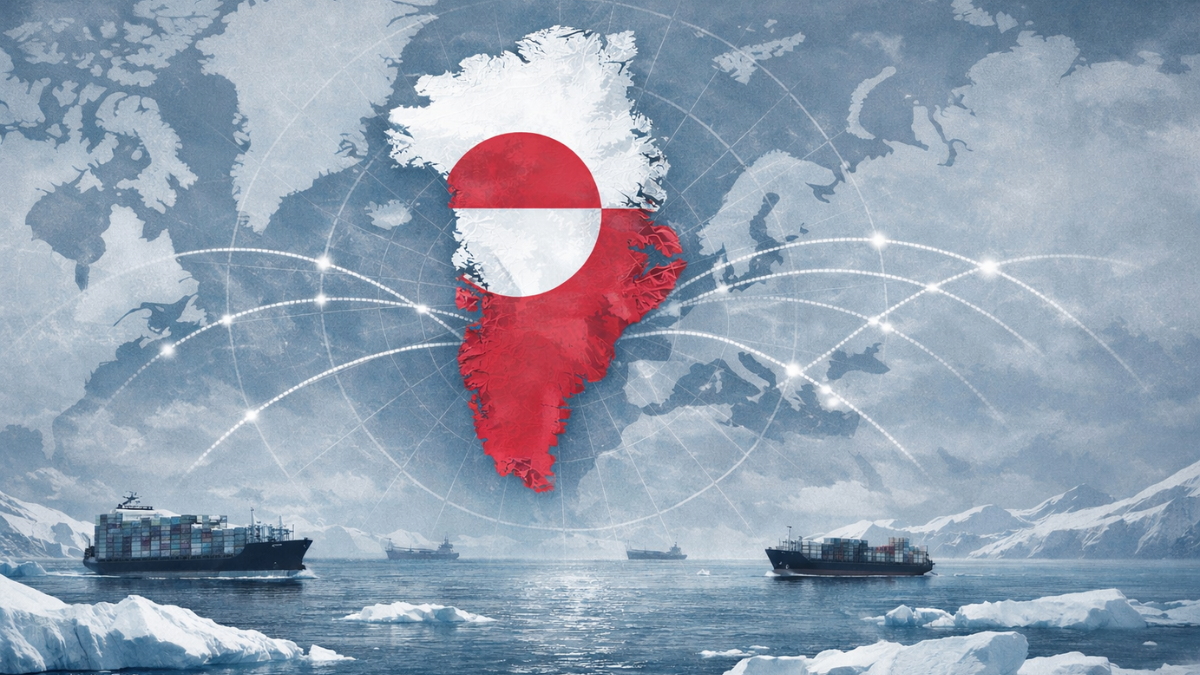


Europe has issued a strong response after Danish Prime Minister Mette Frederiksen said the continent would not give in to pressure following threats made by US President Donald Trump over Greenland. The warning came after Trump linked new trade tariffs to opposition against his proposal to take control of the Arctic territory.
The dispute has caused concern across Europe and among NATO allies. Leaders say the move risks damaging long-standing trade ties and cooperation. Greenland is an autonomous territory within the Kingdom of Denmark, and decisions about its future involve issues of sovereignty, security, and international law.
Frederiksen said Europe wants cooperation and is not seeking conflict, but made it clear that economic pressure would not be accepted. Other European leaders echoed this message, stressing unity and support for Denmark and Greenland.
Greenland’s Strategic Role and Tariff Threats
Greenland is sparsely populated but rich in natural resources. Its location between North America and the Arctic makes it important for early warning systems against missile attacks and for monitoring ships in the region. The United States already has a military presence there.
Donald Trump has repeatedly said Greenland is critical for US security. He has claimed Denmark has failed to protect the island from threats, including from Russia. He has said the US would get Greenland “the easy way” or “the hard way,” and has not ruled out the use of force.
Taiwan doubles down on AI chip leadership in landmark US Tariffs deal as China looks on
On Saturday, Trump announced plans to impose new tariffs on goods imported into the United States from eight allied countries: Denmark, Finland, France, Germany, the Netherlands, Norway, Sweden, and the United Kingdom. He said a 10% tariff would begin on 1 February and could rise to 25% in June.
The tariffs would apply to all goods sent to the US from those countries. Trump said they would remain in place until a deal was reached for what he called the complete purchase of Greenland. He shared the statement on his Truth Social platform.
US Treasury Secretary Scott Bessent later said on US television that Greenland could only be defended if it became part of the United States. He added that he believed this would be best for Greenland, Europe, and the US.
European leaders warned that using trade penalties to force territorial changes could undermine trust and harm global economic stability.
European Unity, Protests, and NATO Response
Leaders from the eight affected countries released a joint statement expressing full solidarity with Denmark and the people of Greenland. They said the tariff threats risk undermining transatlantic relations and creating a dangerous downward spiral.
The statement also reaffirmed their commitment to strengthening Arctic security through NATO. Leaders said they were ready for dialogue but only based on respect for sovereignty and territorial integrity.
Canada considers joining NATO exercises in Greenland amid Trump tariffs
UK Prime Minister Sir Keir Starmer described the tariff threat as completely wrong and said the UK would raise the issue directly with the White House. French President Emmanuel Macron said he would ask the European Union to consider using its anti-coercion instrument if the tariffs are imposed.
Norwegian Foreign Minister Espen Barth Eide said respect for sovereignty is a non-negotiable principle of international law and essential for peace and cooperation.
Canadian Prime Minister Mark Carney said Canada was concerned about the escalation and would increase Arctic security by strengthening its military and investing in infrastructure. He said NATO cooperation remains the best way to secure the region.
NATO Secretary General Mark Rutte confirmed he had spoken with Trump about Arctic security and said discussions would continue at the World Economic Forum in Davos.
Public anger remains high in Denmark and Greenland. Protests were held in Greenland’s capital, Nuuk, and in Danish cities. These coincided with a visit to Copenhagen by a US congressional delegation led by Senator Chris Coons, who said Trump’s rhetoric was not constructive.
Greenland’s representative to the US said recent surveys show only 6% of Greenlanders support joining the US, while 85% oppose it. A Reuters/Ipsos poll also showed most Americans do not support US control of Greenland.