

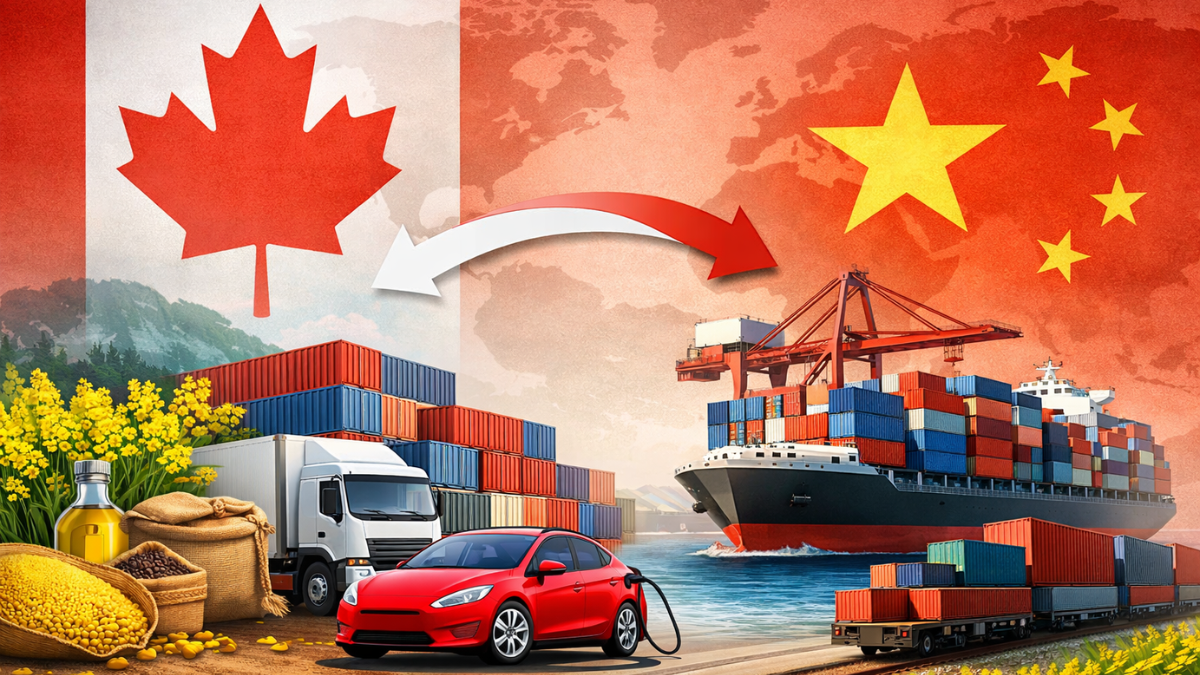


Canada has announced a major shift in its trade policy with China. Prime Minister Mark Carney said the country will lower its 100% tariff on electric vehicles (EVs) made in China. In return, China will sharply reduce tariffs on Canadian farm products. The deal marks an important step in restoring trade relations after several years of tension and trade disruption.
The announcement came after two days of meetings in China between Carney and Chinese leaders, including President Xi Jinping. The talks aimed to reopen dialogue, rebuild trust, and protect Canadian industries facing global trade pressures. Carney described the meetings as “historic and productive,” emphasizing that both countries need to understand differences while focusing on areas where they can cooperate.
Canada Reduces EV Tariffs
Canada will cut the 100% tariff on Chinese-made EVs, making them more accessible in the Canadian market. The agreement includes a limit on imports: 49,000 vehicles initially, rising to 70,000 over five years. These caps are designed to manage market impact while allowing more affordable EVs to enter Canada.
High tariffs were introduced under former Prime Minister Justin Trudeau, aligning Canada with U.S. trade policies, including tariffs on Chinese steel and aluminum. China retaliated with duties on Canadian agricultural products, which restricted access for key exports. Carney’s visit marks a shift toward protecting Canadian interests even if it diverges from U.S. policies.
China’s exports defy tariffs as trade surplus hits historic $1.2 trillion in 2025
During the visit, Carney met with several leading Chinese companies to discuss trade opportunities and cooperation in energy, agriculture, and finance. The discussions reflect a desire to build an economy less reliant on the United States at a time of global trade disruption.
China Lowers Tariffs on Canadian Farm Products
In return for Canada’s EV tariff reduction, China agreed to lower tariffs on Canadian agricultural exports. The biggest change affects canola seeds, one of Canada’s most important farm products. China will reduce its tariff on canola seeds from about 84% to 15%, reopening a market that had been almost closed to Canadian farmers.
China had previously imposed 100% tariffs on canola oil and meal, and 25% tariffs on pork and seafood. An additional 75.8% on canola seeds last August had further restricted Canadian exports. These measures caused serious losses for farmers, as China is one of the world’s largest buyers of Canadian agricultural goods. Trade data shows China’s imports from Canada fell 10.4% last year, reaching $41.7 billion.
This agreement allows Canadian products to regain access to the Chinese market, benefiting farmers and exporters. Industry groups have welcomed the decision, noting that it restores a framework for trade and helps stabilize relationships that had been strained for years.
If America can do this, why can’t China?” — Maduro raid ignites Taiwan fears on Chinese social media
Trade Tensions and Diplomatic Reset
The agreement comes amid rising global trade tensions. Tariffs imposed by the United States under President Donald Trump’s “America First” policies affected both Canada and China, raising costs and disrupting supply chains. Canada had previously followed U.S. lead on tariffs, including matching measures on Chinese EVs, steel, and aluminum.
Carney and Xi Jinping pledged to improve relations after years of limited communication. Earlier talks, including a meeting in South Korea last year, laid the groundwork for the agreement. Business leaders in China, like Jacob Cooke, CEO of WPIC Marketing + Technologies, called the visit “game-changing,” saying it restored dialogue, respect, and a framework for trade.
After completing the visit to China, Carney is scheduled to visit Qatar and then attend the World Economic Forum in Switzerland to meet business leaders and investors. The focus remains on promoting trade and investment while navigating global economic disruptions.
The tariff agreement reflects a significant step in stabilizing trade relationships, protecting Canadian industries, and reopening key markets without altering the facts, timeline, or context of prior trade actions.