

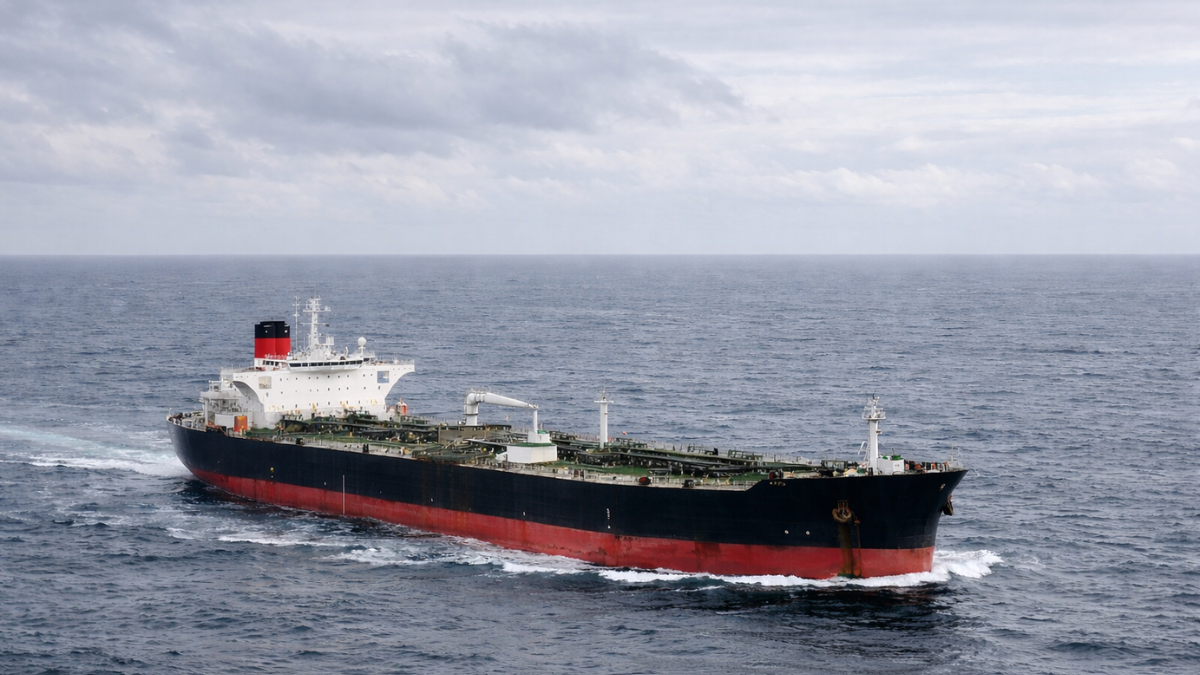


The United States seized a Russian-flagged oil tanker linked to Venezuelan oil exports on Wednesday after tracking it for more than two weeks across the Atlantic Ocean. U.S. officials said the operation was part of Washington’s effort to block Venezuelan oil shipments that violate U.S. sanctions.
The tanker, now named Marinera and previously known as Bella-1, had earlier avoided U.S. authorities in the Caribbean. Last month, the U.S. Coast Guard attempted to board the vessel, but the crew refused. The ship then continued sailing and later changed its name and registered under a Russian flag.
The seizure took place in the Atlantic near Iceland. U.S. military officials said the tanker was taken for violating U.S. sanctions connected to Venezuelan oil. In a public statement, the U.S. military’s European Command confirmed the action. U.S. Defense Secretary Pete Hegseth said the blockade of sanctioned and illicit Venezuelan oil remains fully enforced worldwide.
Weeks-Long Chase and Russian Reaction
U.S. officials said the tanker was closely followed for more than two weeks as it crossed the Atlantic Ocean. The operation involved both the U.S. Coast Guard and the U.S. military. U.S. special forces initially boarded and secured the ship before leaving it under Coast Guard control.
Venezuela secretly shipped $5.2 billion in gold to Switzerland as Maduro’s economy unraveled
Officials speaking anonymously said Russian military vessels were operating in the general area during the seizure, including a Russian submarine. However, they said there were no signs of a confrontation between U.S. and Russian forces.
After the boarding, Russia’s transport ministry said it lost contact with the Marinera. Russian officials criticized the move strongly. Andrei Klishas, a senior lawmaker from Russia’s ruling United Russia party, described the seizure as an act of piracy, according to Russian state media.
It remains unclear where the seized tanker will be taken. Sources said it would likely enter British territorial waters. Britain’s Ministry of Defence declined to comment.
The Marinera had previously slipped through what U.S. officials describe as a maritime blockade aimed at stopping sanctioned tankers carrying Venezuelan oil. U.S. authorities say such ships often change names, flags, and tracking details to avoid detection.
Second Tanker Intercepted and Broader Oil Crackdown
On the same day, the U.S. Coast Guard intercepted a second tanker linked to Venezuela in Latin American waters. The second vessel, M Sophia, sailed under a Panama flag and was described by U.S. Southern Command as a “stateless, sanctioned dark fleet motor tanker”.
Multiple Venezuelan tankers depart without authorization during U.S. blockade
The M Sophia was intercepted before dawn and is now being escorted to the United States for what officials called final disposition. Shipping data and sources said the tanker left Venezuelan waters in early January as part of a group of ships carrying Venezuelan oil to China while operating in “dark mode,” meaning their tracking systems were turned off.
These seizures are part of a broader U.S. campaign to limit Venezuela’s oil exports. Since U.S. energy sanctions were imposed in 2019, traders and refiners have relied on a “shadow fleet” of tankers. These ships often disguise their routes, change ownership records, or use flags from different countries to move sanctioned oil.
The tanker seizures came just days after U.S. special forces carried out a raid in Caracas that resulted in the capture of Venezuelan President Nicolas Maduro. He was taken to the United States to face charges related to alleged drug trafficking. Venezuelan officials have called the action a kidnapping and accused the U.S. of trying to take control of the country’s oil resources.
U.S. President Donald Trump has accused Venezuela of stealing U.S. oil, referring to the nationalization of its energy sector. He has said Washington reached a deal allowing up to $2 billion worth of Venezuelan oil exports to the United States. Trump has also said he wants interim President Delcy Rodriguez to give U.S. companies full access to Venezuela’s oil industry.
Millions of barrels of Venezuelan oil remain stored on tankers and in storage facilities because of the U.S. blockade imposed in mid-December.