

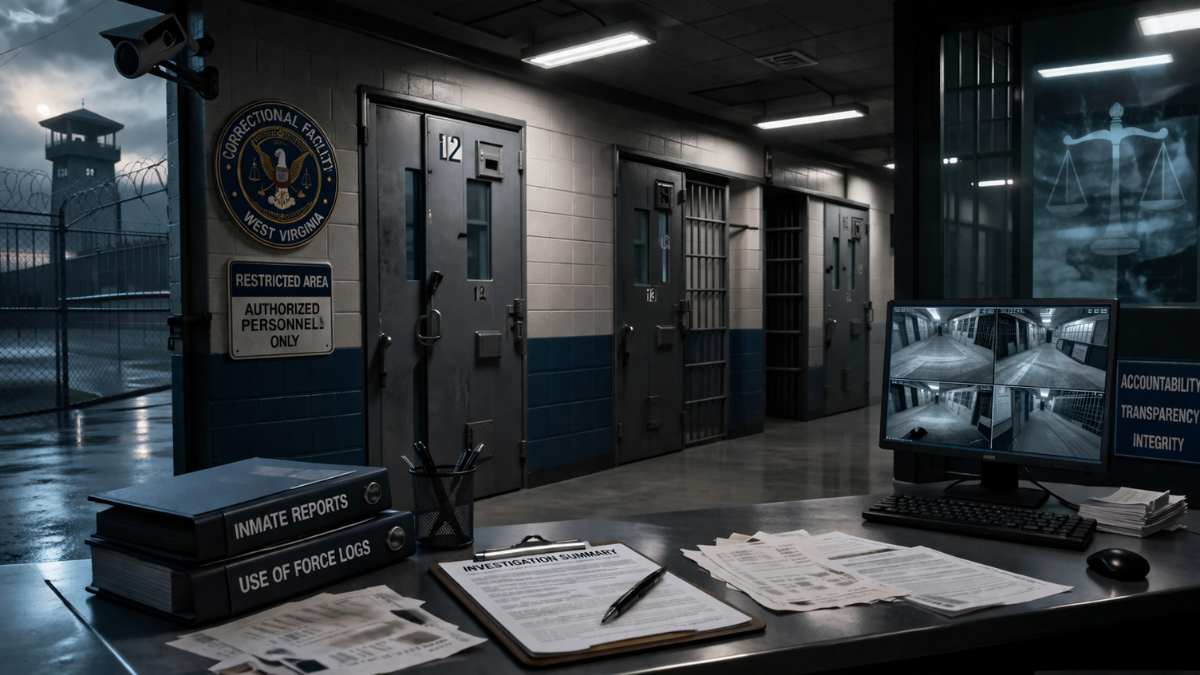


A serious criminal case has come out of a jail in West Virginia, United States, involving abuse of inmates and violation of basic human rights. The case took place at the Southern Regional Jail in Beaver, West Virginia. This jail holds people who are waiting for trial as well as those who have already been convicted of crimes.
The matter came under investigation after concerns were raised about how some inmates were being treated inside the facility. Federal authorities later began looking into claims that correctional officers were not following proper rules and instead used illegal methods to punish inmates.
According to court records, a former correctional officer named Michael Pack admitted his role in the conspiracy. The investigation showed that this was not a single event but a repeated pattern involving multiple officers working together inside the jail.
The focus of the investigation was the violation of inmates’ rights. These rights protect people in custody from cruel or unnecessary punishment, even while they are in jail. Facilities are required to ensure safety and fairness for all inmates regardless of their charges.
Conspiracy, Abuse, and Cover-Up Inside the Jail
Court findings revealed that Michael Pack admitted being part of a conspiracy with other officers. The group was accused of using unreasonable and excessive force against inmates. This means physical force that was not needed or justified under jail rules.
The force was allegedly used as punishment or retaliation. In simple terms, inmates were reportedly harmed because officers believed they had misbehaved inside the jail. Instead of following official disciplinary steps, physical force was used directly against them.
A key part of the case involved how these acts were carried out in hidden areas of the jail. Officers allegedly took inmates to “blind spots,” which are locations without surveillance cameras. These areas made it difficult for any abuse to be recorded or proven later.
According to the guilty plea entered before U.S. Magistrate Judge Omar J. Aboulhosn, these hidden locations were used to avoid accountability and detection.
The conspiracy also included efforts to cover up what happened. Reports were allegedly written in a false or misleading way. Injuries sustained by inmates were not properly documented, and some incidents of force were denied in official records.
This created a system where misconduct could remain hidden. The false reports made it harder for authorities to investigate or identify abuse inside the jail.
The inmates involved included pretrial detainees, meaning they had not been convicted of any crime. Despite this, they were allegedly subjected to treatment that violated their legal rights.
Medical device leader Balt SAS agrees to pay 1.2 million dollars following DOJ probe
Federal Charges, Guilty Plea, and Legal Proceedings
The case was prosecuted under federal law, specifically 18 U.S.C. § 371, which covers conspiracy to commit an offense against the United States or to defraud the government. It is used when individuals agree to break federal law or hide illegal actions.
By pleading guilty, Michael Pack admitted participating in the conspiracy involving excessive force, abuse, and cover-up efforts. The admission confirms involvement in both the actions and the attempts to conceal them.
The guilty plea was entered before U.S. Magistrate Judge Omar J. Aboulhosn. The sentencing is scheduled for July 24, where the court will decide the punishment.
The maximum penalty under this charge includes up to five years in prison and a fine of up to $250,000.
The case was investigated and prosecuted by Deputy Chief Christine M. Siscaretti and former Trial Attorney Sam Kuhn from the U.S. Department of Justice Civil Rights Division, working with the U.S. Attorney’s Office for the Southern District of West Virginia.
The case highlights federal action focused on ensuring inmates’ civil rights are protected and that correctional staff follow lawful procedures while performing their duties inside detention facilities.