

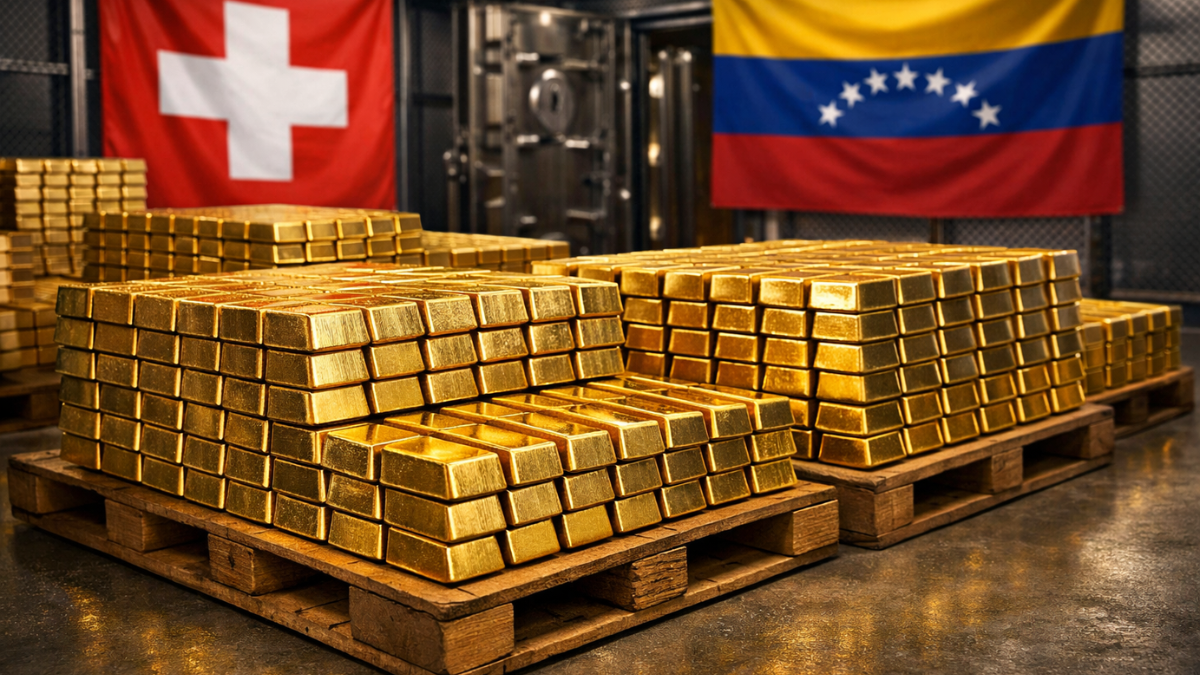


Between 2013 and 2016, Venezuela, under President Nicolás Maduro, shipped a total of 113 metric tons of gold to Switzerland. Customs data reviewed by Reuters shows the value of this gold reached approximately $5.2 billion, or 4.14 billion Swiss francs. These transfers came directly from the Central Bank of Venezuela, which manages the country’s official gold reserves.
The shipments began in 2013, the year Maduro assumed office. At that time, Venezuela was experiencing deep economic challenges. Oil revenues were falling, inflation was rapidly increasing, and access to foreign currency was severely limited. To address these challenges, the government relied heavily on its gold reserves, selling them to raise funds and support the economy.
Gold reserves are often a country’s financial safety net. They can be converted into cash quickly when other revenue sources are unavailable or insufficient. During these years, Venezuela’s central bank sold large quantities of gold to meet urgent financial needs and raise hard currency. Customs records indicate that shipments to Switzerland continued steadily until 2016, after which no gold exports were recorded.
Multiple Venezuelan tankers depart without authorization during U.S. blockade
The data shows that Venezuela engaged in what analysts call “distress selling,” moving reserves rapidly to respond to economic pressures. These gold exports were among the largest transfers from the country in recent history, highlighting the scale of the financial strain during Maduro’s early years in power.
Why Switzerland Was the Destination
Switzerland is one of the world’s leading centers for gold refining and trading. The country is home to five major gold refineries that process a significant portion of global gold. According to Swiss broadcaster SRF, Venezuelan gold was likely sent to Switzerland for refining, certification, and onward transport. Refined gold can be more easily sold or converted into smaller bars for sale or shipment to other global markets.
Gold shipments do not necessarily remain in Switzerland permanently. After processing, the gold may be sold to financial institutions, or transported to other regions, including Asia. Rhona O’Connell, a markets analyst at StoneX, explained that much of Venezuela’s gold was sold quickly during 2012–2016, and much of it passed through Switzerland before entering wider financial markets.
Exports to Switzerland stopped in 2017, coinciding with European Union sanctions on certain Venezuelan individuals accused of human rights violations or undermining democracy. Switzerland adopted these sanctions in early 2018. While the sanctions did not impose a general ban on gold imports from Venezuela, the country’s gold reserves had already declined significantly, which also contributed to the halt in shipments.
U.S. prosecutors drop core ‘narco cartel’ narrative in stunning Venezuela indictment shift
Sanctions, Asset Freezes, and Legal Developments
From 2017 to 2025, Venezuela exported no gold to Switzerland, reflecting the combined impact of reduced reserves and increasing international restrictions.
In January 2026, Nicolás Maduro was captured by U.S. special forces in Caracas. He now faces charges in a New York court, including drug trafficking and narco-terrorism. Following this, Switzerland froze assets held in the country linked to Maduro and 36 associates, though officials did not reveal the total value or the exact source of these funds. It is currently unknown whether these frozen assets are connected to the gold shipped from the central bank between 2013 and 2016.
During Maduro’s early presidency, the central bank relied heavily on gold sales to secure hard currency, especially as U.S. sanctions limited access to other financial avenues. As gold reserves dwindled over time, Venezuela’s ability to continue such sales was sharply reduced, explaining the sudden drop in exports after 2016.
All the available information comes from customs data and public reporting. These records provide a clear view of how Venezuela used its gold reserves during a period of serious economic stress, showing that gold was sent to Switzerland for processing and sale without confirmed misuse beyond documented transfers.