

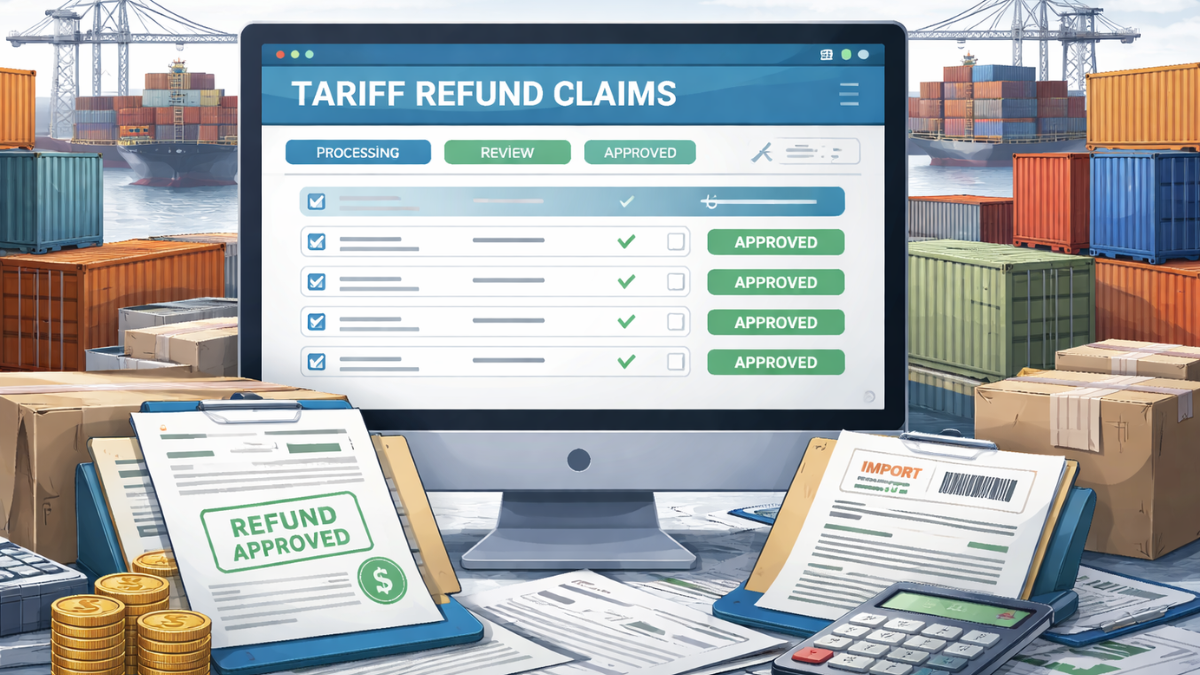


The United States government is working to build a system that will refund billions of dollars in tariffs that were later ruled illegal. According to a recent court filing, the system being developed by U.S. Customs and Border Protection is now between 40% and 80% complete, depending on the stage of the process.
The refunds relate to tariffs that were collected from importers beginning in February 2024. These payments are estimated to total about $166 billion, including interest. The government must now return this money to the businesses that originally paid the tariffs.
In a filing submitted to the U.S. Court of International Trade, customs official Brandon Lord explained that the agency is creating a four-part system to manage the refund process. The system will include an online portal where importers and customs brokers can submit refund claims.
After the claims are submitted, they will go through stages that include processing, review, and finally refund payments. Officials indicated that the portal for submitting applications could begin operating as soon as mid-April.
Court Order Triggers Large Tariff Refund Process
The need for the refund system arose after most U.S. tariffs were struck down by the Supreme Court of the United States in February. The decision dealt a major blow to the trade policy of Donald Trump, under which the tariffs had been imposed.
Lenovo challenges Trump-era tariffs in US trade court and seeks repayment with interest
However, the Supreme Court ruling did not provide instructions on how the government should return the tariff money that had already been collected. Because of this gap, Richard Eaton ordered the customs agency to begin processing refunds.
The judge initially directed the agency to start issuing refunds using its existing system. Instead, customs officials proposed building a new digital process that would allow companies to apply for refunds without having to file lawsuits.
According to the court filing, the development of the system is progressing at different speeds. The review portion of the system is about 80% complete, making it the most advanced section. Meanwhile, the mass processing part, which will handle large volumes of claims, is only about 40% complete.
Even with these differences in progress, officials said the portal to accept refund claims could be ready within weeks.
Millions of Shipments and Companies Affected
The scale of the tariff refund effort is very large. Court documents show that more than 330,000 importers paid the tariffs during the period covered by the court decision. These payments were connected to around 53 million shipments entering the United States.
Despite the large number of affected companies, only about 21,000 importers are currently registered in the customs system that will allow them to receive refunds. Many smaller businesses have expressed concern that the effort and cost of filing claims may be greater than the refunds they might receive.
Vietnam moves to reduce fuel tariffs to stabilize domestic prices during Iran war
Several large companies have already taken legal action to protect their right to refunds. Some importers filed lawsuits against U.S. Customs and Border Protection after officials suggested that refunds could take up to five years to complete.
Consumer groups and lawmakers have also raised questions about who will ultimately benefit from the refunds. Under the current rules, the government will return the money only to the importers who originally paid the tariffs, not directly to consumers.
In response, some customers have filed lawsuits against companies such as FedEx and Costco, arguing that businesses should pass the refunds on to customers if they had previously raised prices because of the tariffs. FedEx has said it plans to reimburse customers if it receives refund payments, while Costco has stated that any refunds it receives would be used to lower prices.
Following the Supreme Court decision that struck down the earlier tariffs, Donald Trump introduced new tariffs of 10% using a decades-old authority intended to address a balance-of-payments emergency. These new tariffs are now being challenged in court by several states and private businesses, which argue that the measures were also imposed illegally.
At the same time, the administration has begun investigating trade practices of major trading partners. These investigations are considered a possible step toward imposing tariffs under another law that has previously survived legal challenges.