

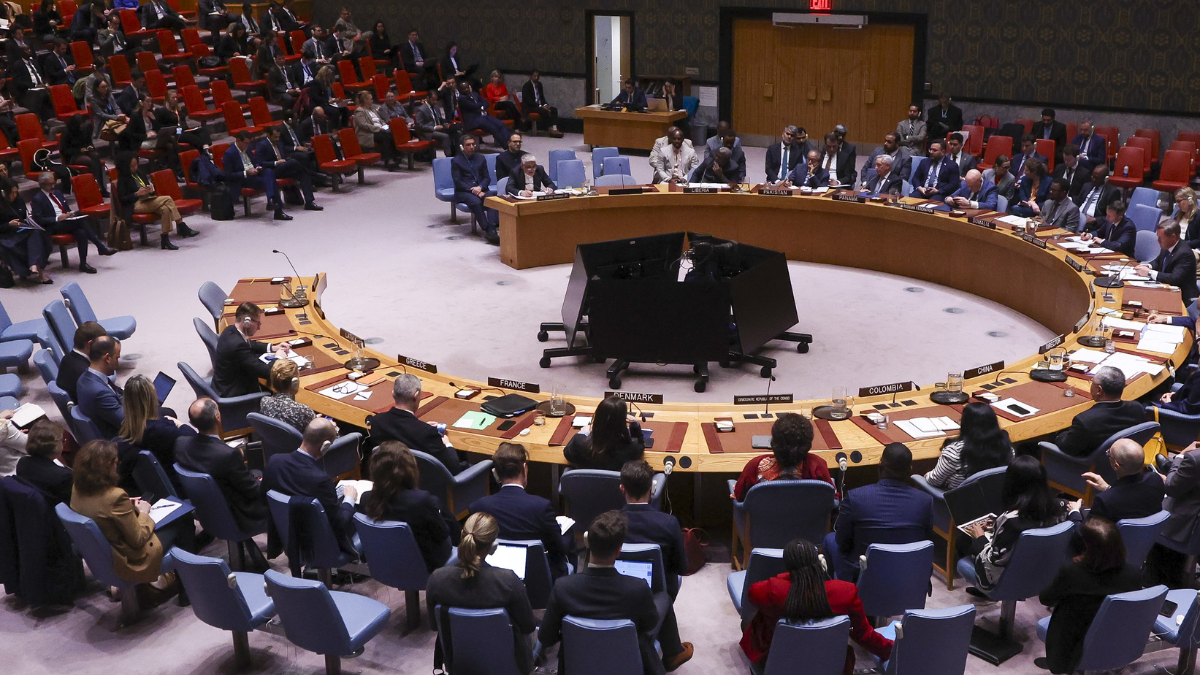


A major disagreement has taken place at the United Nations over how to protect one of the world’s most important shipping routes, the Strait of Hormuz. This narrow waterway carries a large share of global oil and natural gas, making it vital for energy supply. Any disruption here quickly affects fuel prices and trade worldwide.
The situation has become more serious due to an ongoing conflict involving Iran. The strait, which usually handles about one-fifth of global energy shipments, has been largely restricted. This has raised concerns among countries that depend on steady oil and gas supplies.
To address this, a draft resolution was presented at the United Nations Security Council. The aim was to encourage countries to coordinate efforts to protect commercial ships moving through the strait. The proposal focused only on defensive actions, including cooperation and possible escorting of vessels.
The resolution was introduced by Abdullatif bin Rashid Al Zayani. It had already been softened before the vote to gain wider support. Earlier stronger points, such as enforcement measures, were removed. The final version avoided any mention of using force and instead stressed safety and coordination.
Shipping backlog in Strait of Hormuz to be managed with US support after ceasefire
UN Vote Fails After Veto by China and Russia
Despite these changes, the resolution on protecting shipping in the Strait of Hormuz failed to pass. Out of 15 members, 11 voted in favor. However, China and Russia voted against it. As permanent members, their veto power blocked the resolution. Two countries abstained.
China and Russia said the draft was unfair and biased against Iran. China’s UN envoy Fu Cong said passing such a resolution during rising tensions would send the wrong signal. Russia’s UN Ambassador Vasily Nebenzya also supported this view and called for a different approach.
China’s Foreign Ministry spokesperson Mao Ning stated that actions by the council should not worsen the situation. Both countries emphasized that the focus should be on reducing tensions and encouraging dialogue.
France reacted with disappointment. Its UN Ambassador Jerome Bonnafont said the resolution aimed only at defensive steps to ensure safe navigation in the Strait of Hormuz, not escalation.
After the vote, China and Russia indicated they were working on an alternative proposal. This new draft is expected to focus on de-escalation and a return to diplomacy.
South Korea introduces tariff relief and faster customs clearance amid Hormuz crisis
Impact of the Conflict on Global Trade and Aid
The ongoing conflict has already had serious global effects. Since late February, tensions increased after strikes involving United States and Israel against Iran. In response, Iran restricted movement through the Strait of Hormuz.
This disruption has pushed oil prices higher, as countries fear supply shortages. It has also affected the transport of essential goods. According to statements at the UN by Mike Waltz, delays have impacted delivery of medical aid and supplies to regions facing crises, including parts of Africa and the Middle East.
The United States strongly criticized the vetoes. Its stance has also been shaped by warnings from Donald Trump, who urged action to reopen the strait and ensure safe global trade.
On the other side, Iran welcomed the vetoes. Its UN Ambassador Amir Saeid Iravani said the move prevented misuse of the council to justify aggression. He also confirmed that discussions were ongoing.
A UN envoy, Jean Arnault, has been sent to the region to hold consultations and encourage dialogue. His visit is part of ongoing efforts within the United Nations to address the crisis.
The rejected resolution had urged countries to coordinate defensive efforts and ensure safe navigation. It also supported steps to prevent any attempts to block or interfere with shipping. However, without approval, these measures will not move forward under the United Nations system.