

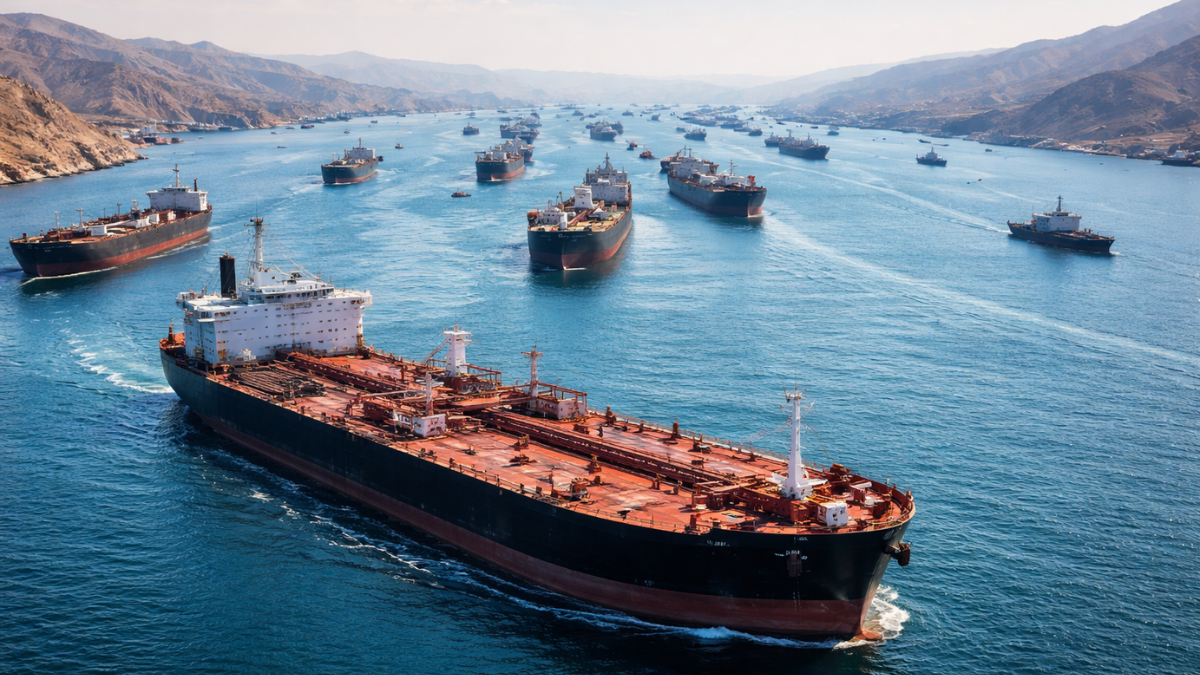


A major situation has developed around the Strait of Hormuz, one of the busiest and most important shipping routes in the world. This narrow waterway is used to transport a large share of the world’s oil and fuel. Recently, tensions in the region led to a serious disruption in shipping traffic.
The issue began when Iran moved to block or restrict the flow of oil and gas shipments through the strait. This caused a large number of ships to become stuck in the surrounding waters. Tankers carrying crude oil and refined fuels were unable to pass through, leading to a massive buildup of vessels in the area.
Reports show that around 200 tankers are currently waiting in the region. These ships are carrying nearly 130 million barrels of crude oil and about 46 million barrels of refined fuel. The blockage has created a significant delay in global energy supply chains. The data related to these shipments has been highlighted by Kpler.
The situation quickly became tense, as the strait plays a key role in global trade. Any disruption in this area can impact oil supply across many countries. This made the situation serious and required urgent attention.
Strait of Hormuz crisis brings over 40 countries into UK-led sanctions talks
Ceasefire Agreement Brings Temporary Relief
In response to the growing crisis, a temporary ceasefire agreement was reached. The agreement was finalized just hours before a deadline that had been set for reopening the strait. The deal allows for a pause in hostilities for a period of two weeks.
Under this agreement, Iran is expected to stop its blockade and allow ships to pass through the strait again. This move is aimed at clearing the congestion of vessels and restoring the normal flow of oil shipments.
The ceasefire was announced by Donald Trump, who described the situation as a major success after the agreement was reached. The reopening of the strait is expected to help release the large volume of oil and fuel that has been stuck in the region.
The agreement also creates an opportunity for exporters in the Middle East to resume their shipments. Many of them had been unable to move their cargo due to the disruption. With the strait reopening, these shipments can now begin moving again.
US Steps In to Manage Shipping Traffic
Alongside the ceasefire, the United States has announced that it will help manage the traffic buildup in the Strait of Hormuz. This includes ensuring that ships can move safely and smoothly through the area.
Ships asked to pay in yuan or crypto for transit through the Strait of Hormuz
Donald Trump stated that the United States will stay present in the region and be ready with supplies of different kinds. The aim is to make sure that everything goes well as ships begin moving again through the strait.
The plan involves maintaining a presence in the region to support shipping operations. The goal is to make sure that the reopening of the strait happens without further problems. By staying in the area, the United States aims to prevent new disruptions and ensure that everything proceeds as planned.
Officials have stated that they will be ready with supplies and resources. Their presence is meant to support safe navigation and help clear the backlog of tankers waiting in the waters. This move is expected to ease the pressure on the shipping system.
The situation has also drawn attention because of the large amount of oil currently stuck in the region. The release of these supplies could have a noticeable impact on global markets. For now, the focus remains on safely managing the movement of ships and maintaining stability in the area.
The ceasefire and support measures are temporary, lasting for two weeks. During this time, efforts will continue to ensure that shipping traffic returns to normal and that the strait remains open for global trade.