

For more than twenty years, Iran has lived under some of the toughest international sanctions in modern history. These restrictions aimed to isolate the country, limit its access to global finance, and reduce the flow of money linked to its nuclear program and regional activities. Yet, even under this pressure, large sums of money quietly left the country. The story of a vast overseas property network linked to the family of Iran’s top leader shows how this was possible.
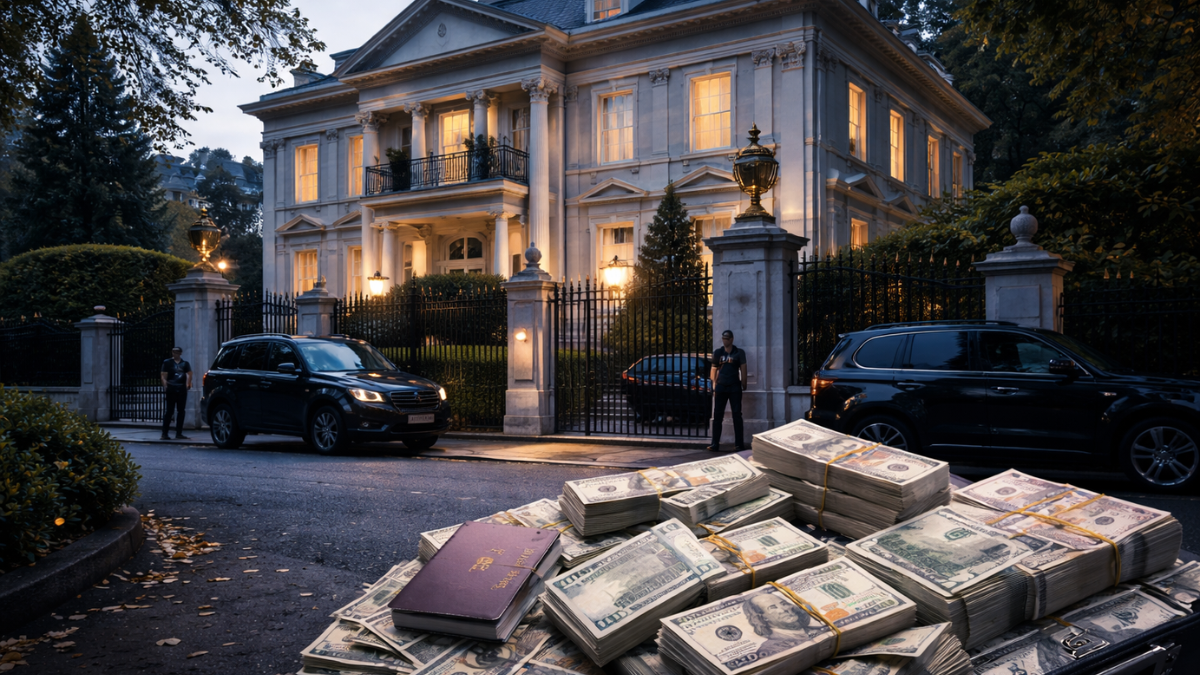
On a quiet, tree-lined street in north London, often called one of the richest residential areas in the world, rows of large mansions sit hidden behind tall hedges and dark gates. Many of these homes appear empty. Private security patrols the area while children walk past on their way to school. On the surface, it looks like just another wealthy neighborhood. But behind these buildings lies a financial network that stretches across several countries and continents.
This network, according to people familiar with the matter and intelligence assessments, is linked to the second son of Iran’s Supreme Leader. A cleric in his mid-fifties and a powerful figure behind the scenes, he has long avoided public attention. Yet his financial reach has quietly expanded far beyond Iran’s borders, moving through shell companies, foreign bank accounts, and trusted intermediaries.
A network built to move money quietly
The overseas investment structure did not appear overnight. It developed gradually, starting more than a decade ago, at a time when sanctions were already limiting Iran’s access to the global economy. Instead of holding assets directly, the network relied on layers of companies registered in different countries. These companies often had no obvious public connection to Iran or to political power.
Money flowing into the system mainly came from oil sales. While Iran officially sells oil through a state-owned company, sanctions pushed much of this trade into opaque channels. Front firms, middlemen, and overseas traders became essential. People close to the leadership were able to oversee parts of these networks, helping route funds out of the country and into foreign markets.
China warns US against attacking Iran, says ‘military adventurism’ could plunge West Asia into chaos
The funds passed through banks in several financial centers, including Europe and the Middle East. Accounts were opened in countries known for strong banking systems and, in some cases, limited transparency around ownership. This made it harder for regulators to trace the true source of the money or identify who ultimately controlled the assets.
Over time, the network invested heavily in real estate. Property was a safe choice. Buildings hold value, generate income, and can be sold quietly if needed. Over time, the portfolio expanded to include luxury homes in London and high-end villas across the Gulf region. At the same time, it added premium hotels in major European cities. In several cases, individual properties alone were worth tens of millions of euros. Taken together, the total value of these holdings reached well into the hundreds of millions, and possibly more.
The role of trusted intermediaries
A key feature of the network was the use of trusted business figures to act as the public face of the investments. These individuals appeared as company directors, shareholders, or beneficial owners on paper. In reality, according to people familiar with the arrangements, they acted as custodians of wealth rather than true owners.
One such intermediary rose from a modest background to become a major figure in Iran’s construction, banking, and retail sectors. Over the years, he secured valuable state contracts and licenses, allowing him to build a vast domestic business empire. These same industries, especially construction, shipping, and energy-related trade, were also useful for moving large sums of money across borders.
As his domestic influence grew, so did his role abroad. He helped establish companies in offshore jurisdictions and opened banking relationships across Europe. These structures allowed operators to transfer profits from oil-linked trade and other activities into foreign accounts and then invest the money in property and hospitality assets.
Citizenship and residency options in Europe also played a role. Holding a foreign passport made it easier to open bank accounts, register companies, and operate within the European financial system. This added another layer of distance between the assets and their original source.
Despite the scale of the wealth involved, official records did not list any of the properties or companies in the name of the Supreme Leader’s son. This separation gave those involved plausible deniability and reduced the risk of direct sanctions exposure, at least until recent years.
Sanctions, scrutiny, and rising pressure in Iran
The existence of this overseas property empire stands in sharp contrast to the public image promoted by Iran’s leadership. State media often portrays the ruling family as living simply and modestly, in line with revolutionary ideals focused on faith. There is little public evidence that the foreign assets were used for flashy lifestyles. Still, the scale of the hidden wealth has fueled anger inside Iran.
As economic conditions worsened, poverty increased, and protests spread, public frustration increasingly focused on elite corruption. The children of powerful figures became symbols of unfair privilege. The discovery of luxury homes, hotels, and foreign investments linked to those at the top only deepened this resentment.
International scrutiny has also intensified. Authorities in several countries have begun examining property ownership, bank transfers, and company structures tied to politically exposed figures. In the United Kingdom, sanctions placed on a central intermediary led to asset freezes, complicating control over some of the European holdings. Officials in other countries have raised concerns that people were using their financial systems to shelter money linked to repression and sanctions evasion.
Hotels in major financial cities and resort destinations attracted attention from local authorities, while changes in company ownership structures suggested efforts to adapt quickly to growing pressure. In some cases, assets were sold off, possibly to reduce exposure ahead of further restrictions.
Experts on illicit finance say this case highlights weaknesses in the global system. Gaps in beneficial ownership rules, uneven enforcement of sanctions, and complex corporate structures make it possible for powerful networks to operate for years without detection. Even under one of the world’s harshest sanctions regimes, money found ways to move.
At the same time, geopolitical tensions have added urgency. With Iran facing military pressure, regional setbacks, and leadership succession questions, the existence of a large overseas asset base takes on added significance. It shows how members of the elite prepared for uncertainty, quietly securing wealth far from home.
The global property empire linked to the Supreme Leader’s son is not just a story about real estate. It is a window into how power, money, and influence move in the shadows, crossing borders even when laws are designed to stop them.