

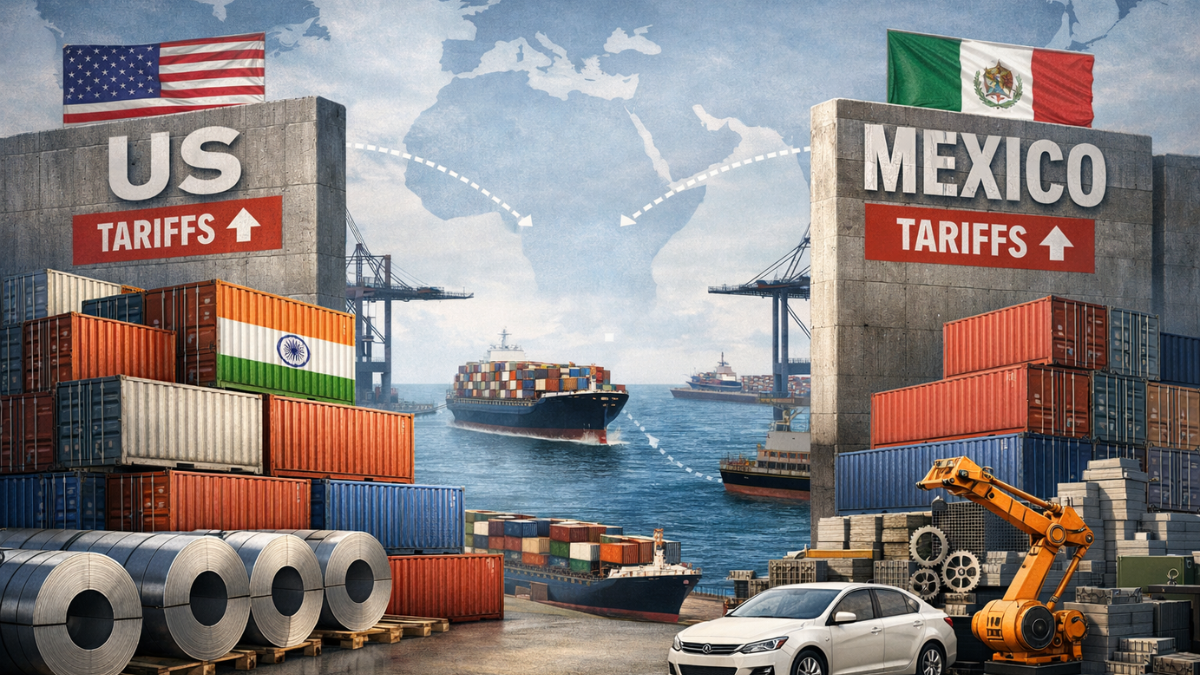


Indian exporters are under growing strain after Mexico imposed steep import tariffs on goods from India, adding to the pressure already created by high tariffs from the United States. This combination of trade barriers has affected several Indian industries, cutting export orders and weakening supply chains built over many years.
For many businesses, Mexico had emerged as a key alternative market after exports to the US declined. Companies redirected shipments and invested in supply links with Mexico to manage losses caused by US tariffs. The sudden change in Mexico’s trade policy has now reduced those opportunities, leaving exporters with fewer options.
US Tariffs Trigger Sharp Decline in Indian Exports
The challenges began when the United States imposed heavy tariffs on Indian goods. In August, US President Donald Trump announced a 25 percent tariff on imports from India. This was followed by another 25 percent tariff, imposed as a penalty for India’s continued purchase of Russian oil, which the US administration said was helping to fund Russia’s war on Ukraine.
These tariffs made Indian products more expensive in the US market. As a result, exports fell across several sectors. Industries such as steel, diamond cutting, shrimp farming, carpet manufacturing, and auto components saw reduced demand and shrinking revenues.
Mexico walks tariff tightrope as US warns against fuel shipments to crisis-hit Cuba
With access to the US market becoming difficult, many Indian exporters shifted focus to Mexico. The country was seen as a stable market with strong trade links to North America. Businesses invested in production and logistics tied to Mexico in an effort to recover lost sales.
Mexico Introduces High Tariffs on Non-FTA Countries
On January 1, Mexico introduced import tariffs ranging from 5 percent to 50 percent on more than 1,400 products from countries that do not have a free trade agreement with it. India is among the affected nations, along with Brazil, China, South Korea, Russia, Indonesia, and Thailand.
Mexico has free trade agreements with more than 50 countries, including the United States, Canada, Japan, and members of the European Union. Goods from these countries continue to enjoy lower or zero tariffs, placing Indian exports at a disadvantage.
The Mexican government has said the tariff hike is meant to boost domestic production, reduce trade imbalances, and protect local jobs. Indian businesses, however, believe the decision is also linked to concerns about trans-shipment and supply chain diversion. These practices involve routing goods through third countries to avoid US tariffs, an issue that has gained attention ahead of the review of the US-Mexico-Canada Agreement.
The dog that didn’t bark”: U.S. Treasury chief Bessent concedes tariffs did not fuel inflation
Key Sectors Affected and Policy Response in India
The impact of Mexico’s tariff hike has been widespread. Steel exports face the steepest increase, with duties reaching 50 percent. Automobiles and auto components have been hit with tariffs of up to 35 percent. Labor-intensive sectors such as garments and ceramics now face duties between 25 percent and 35 percent. Plastics, aluminum, and chemicals are also affected, with tariffs ranging from 5 percent to 50 percent.
Trade data highlights the scale of the issue. India exported goods worth $5.6 billion to Mexico in 2024, while imports from Mexico stood at $4.07 billion. Vehicles and auto components formed a major share of exports, followed by electronic equipment. Many auto components exported to Mexico are used in vehicles meant for the US market, making the tariffs particularly damaging.
To ease the impact of falling exports, the Indian government announced measures in the annual budget presented on February 1. Manufacturing units in special economic zones were allowed to sell a limited portion of their output in the domestic market at concessional duty rates. Such sales usually attract high import-level tariffs, especially for textiles and leather goods.
The government also reduced the Goods and Services Tax on automobiles from 28 percent to 18 percent to support domestic demand. India has warned of “appropriate action” against Mexico’s unilateral tariff hike, while industry groups have raised concerns about the growing challenges posed by shifting global trade rules.