

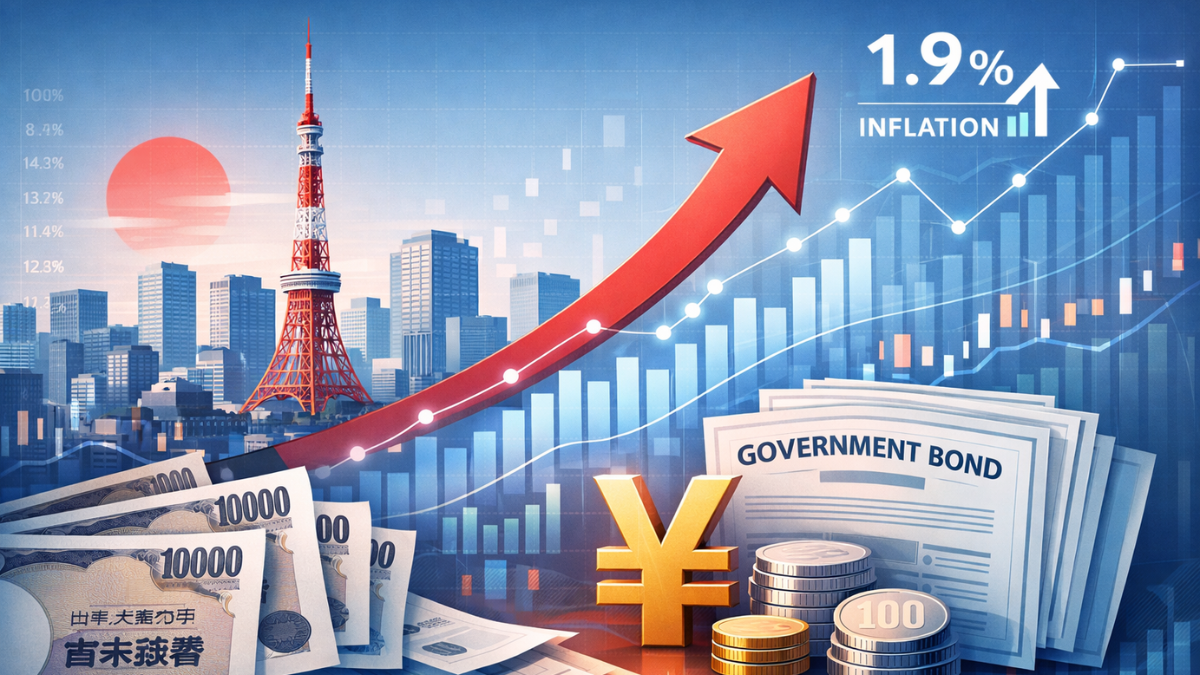


Japan is seeing a noticeable rise in demand for inflation-linked government bonds. These bonds are designed to protect investors when prices go up. When inflation increases, the value of these bonds and their payments also rise. This makes them attractive during times when people expect higher prices in the future.
Recently, market-based inflation expectations in Japan have climbed. A key measure known as the break-even inflation rate crossed 1.9% for the first time in late January. This is an important signal. It shows that investors believe inflation will continue to grow.
Because of this, more investors are turning to inflation-linked bonds. They see these bonds as a safer option to protect their money. As demand increases, the need for government support in this market is changing.
Japan has a long history with low inflation and even deflation, where prices fall instead of rising. So this shift toward higher inflation expectations marks a significant change in the economic environment.
Government Plans to Reduce Bond Buybacks
In response to this growing demand, Japan’s finance ministry is now considering reducing its buybacks of inflation-linked bonds. Buybacks are when the government purchases bonds from the market. This is usually done to support demand and keep the market stable.
Dollar surges in biggest jump since summer as bonds tumble on inflation fears
According to sources familiar with the matter, the government is planning to lower the amount of these buybacks in the coming months. For April and June, the proposed buyback amount is 15 billion yen each.
This is a clear drop compared to earlier months. In January, February, and March, the government bought back 20 billion yen worth of these bonds each month. The planned reduction means the buybacks for April to June could be nearly half of the previous quarter’s levels.
The finance ministry is expected to discuss this proposal with market participants soon. These discussions will help decide whether the plan moves forward as expected.
Even though buybacks may be reduced, the total amount of new inflation-linked bonds being issued is likely to remain the same. The government is expected to keep the issuance volume at 250 billion yen for May. A final decision on this is expected later in the month.
Background and Market Conditions Driving the Change
Japan first introduced inflation-linked bonds in 2004. These bonds were meant to help investors deal with rising prices. However, in 2008, the government stopped issuing them. At that time, Japan was facing deflation. Falling prices increased the risk that investors could lose money on these bonds.
China blacklists 20 Japanese firms in sweeping export control move after Takaichi’s landslide win
Issuance resumed in 2013 as part of broader efforts to revive the economy and move away from deflation under Shinzo Abe. Since then, the government has taken steps to support this market. One key measure has been guaranteeing the principal, which helps protect investors. Another has been regular buybacks to maintain stability.
Now, the situation is different. Inflation expectations are rising again. This trend started before tensions in the Middle East added further pressure to global prices. These global factors have contributed to stronger price momentum.
Economic data also shows some improvement. The supply-demand gap in Japan, based on recent gross domestic product data, has turned positive. This means demand in the economy is starting to exceed supply, at least slightly. It is the first time this has happened in two quarters.
Even so, economists note that a full recovery in demand is still some distance away. While conditions are improving, the market is not yet fully stable.
The planned reduction in bond buybacks reflects this changing environment. With investors showing more interest in inflation-linked bonds, the government may no longer need to support the market as heavily as before.