

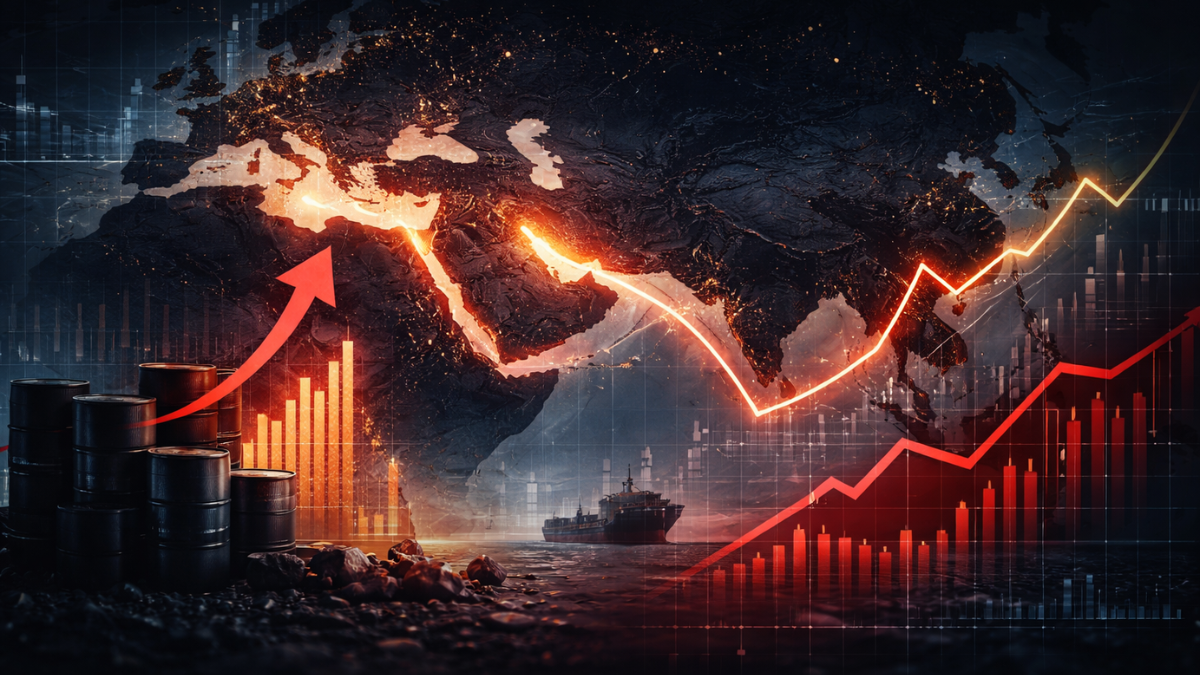


The recent conflict in the Middle East has caused strong reactions across global financial markets. Investors say the impact will not fade quickly. Even after a ceasefire was announced, many signs of stress remain.
During the peak of the conflict, markets saw sharp movements. Stocks and bonds fell at the same time, which is unusual. Normally, when stocks fall, bonds rise. This rare situation showed how serious the crisis had become.
The conflict led to major disruptions in energy supply routes. One of the most important shipping paths for oil and gas was affected. This route carries about one-fifth of the world’s oil supply. When access to such a key route is threatened, global markets react quickly.
After the announcement of a two-week ceasefire, markets showed some recovery. European stocks and government bonds had one of their best days in years. However, experts say this recovery does not mean the problem is over.
Energy prices remain much higher than before the conflict began. Oil prices are still nearly 35 percent above earlier levels. Even though prices have dropped slightly in recent days, they are far from normal.
Energy Prices and Bond Yields Stay Elevated
One of the biggest concerns for investors is the continued rise in energy prices. Damage to infrastructure and reduced trust in stable supply have made the situation worse. This means countries that depend on imported energy are under pressure.
Trump warns of 50 percent tariffs on nations linked to Iran arms supply
At the same time, bond yields have increased. Bond yields are important because they affect interest rates across the economy. When yields go up, borrowing becomes more expensive for governments, businesses, and individuals.
Before the conflict, investors expected central banks to cut interest rates. But now, those expectations have changed. Higher inflation risks due to rising energy costs have made rate cuts less likely.
Short-term government bond yields have risen noticeably. In the United States, the two-year Treasury yield is about 0.4 percentage points higher than before the conflict. In Europe, the increase is even larger. Countries like the United Kingdom, Germany, and Italy have seen yields rise by more than 0.5 percentage points.
This rise in yields reflects growing caution among investors. They now demand higher returns to compensate for increased risks. This is often called a “risk premium.” It shows that markets are pricing in uncertainty.
Investor Confidence Weakens Across Regions
The conflict has also affected how investors view traditionally safe assets. The US dollar and government bonds have long been considered stable and reliable. However, recent events have raised concerns.
Growing national debt and global political tensions have made some investors uneasy. As a result, confidence in these assets has weakened slightly. Investors are beginning to look for alternatives in other regions.
Some are turning to more stable economies or diversifying into emerging markets. This shift shows that trust in global financial systems has been shaken.
European markets have faced even greater pressure. The region depends heavily on imported energy, making it more vulnerable to rising oil prices. During the conflict, European stocks and bonds fell more sharply than those in the United States.
Because of this, some investors have reduced their exposure to European markets. Higher energy costs create challenges for economic growth in the region. This makes it harder for businesses to perform well.
The impact of the conflict has also changed overall market expectations. Even if the ceasefire holds, the damage caused during the weeks of fighting is significant. Infrastructure damage, supply disruptions, and reduced confidence all contribute to a weaker economic environment.
Tensions have not fully eased either. Reports of continued military activity in nearby regions have added to uncertainty. This keeps investors cautious and prevents markets from fully stabilizing.
The phrase “scar tissue” is now being used to describe the situation. It means that the effects of the conflict will remain visible in financial markets. These effects include higher oil prices, increased borrowing costs, and reduced confidence among investors.
Markets may have reacted quickly to the ceasefire, but the underlying issues remain. The conflict has changed how investors see risk, stability, and global economic strength.