

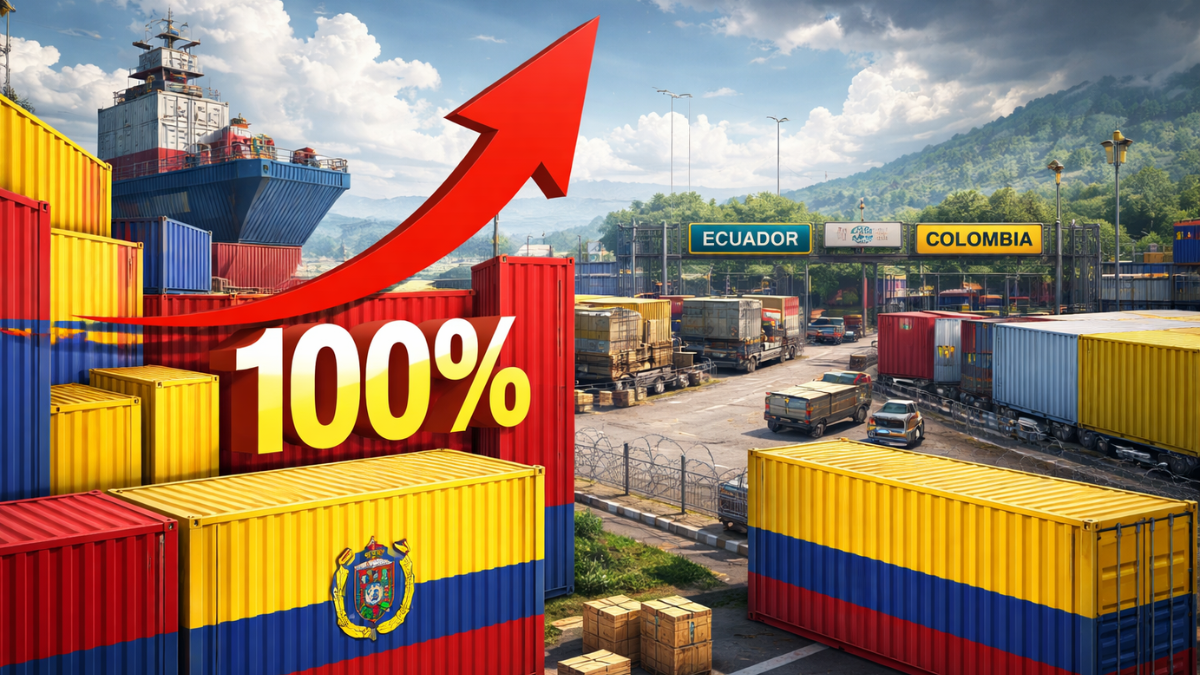


Ecuador has sharply increased tariffs on goods coming from Colombia, raising them to 100% from an earlier 50%. The government announced that this new rate will take effect from May 1. This is the latest step in a series of tariff hikes that began earlier this year.
At the end of January, Ecuador first introduced tariffs at 30%. In late February, it increased them to 50%. Now, the rate has been doubled again. These repeated increases show a growing strain between the two neighboring countries under the leadership of Daniel Noboa.
The government said it was forced to take this action after confirming that Colombia had not implemented effective border security measures. Officials stated that the decision was necessary to protect national interests and maintain control over the situation at the border.
Ecuador has also mentioned its trade deficit with Colombia as one of the reasons behind these measures. A trade deficit means that a country imports more goods than it exports. By raising tariffs, Ecuador is making Colombian goods more expensive, which may reduce imports.
Border Security and Drug Trafficking Concerns
One of the main reasons behind the rising tensions is border security. Ecuador has accused Colombia of not doing enough to control drug trafficking near their shared border. According to Ecuador, this lack of action has allowed illegal activities to increase in the region.
Trump warns of 50 percent tariffs on nations linked to Iran arms supply
Colombia has rejected these claims. The country, led by Gustavo Petro, has stated that it regularly works with Ecuador on joint operations to fight drug trafficking. Officials have said that cooperation between the two countries has been ongoing and effective.
Despite this, Ecuador believes stronger actions are needed. The disagreement over border security has become a major point of conflict and has contributed to the decision to raise tariffs.
The situation worsened after a recent security operation near the border. During this operation, explosives reportedly crossed into Colombian territory. This incident led to the deaths of 14 people. Colombian authorities raised concerns about the operation, while Ecuador stated that it had acted within its own territory and was investigating how the explosives ended up across the border.
Diplomatic and Economic Tensions Deepen
The relationship between the two countries has also been affected by political disagreements. A dispute arose over former Ecuadorian vice president Jorge Glas, who is currently in jail on corruption charges. Colombia described him as a political prisoner and called for his release. Ecuador disagreed strongly with this view.
In response, Ecuador recalled its ambassador from Colombia. It also suspended several planned meetings between the two countries. These meetings were supposed to focus on trade, energy, and security cooperation.
US government refuses aluminum tariff relief request linked to Novelis plant shutdown
Economic tensions have also increased. Colombia has already placed tariffs on some goods coming from Ecuador. In addition, its energy minister Edwin Palma criticized Ecuador’s decision, while Colombia has stopped selling electricity to Ecuador.
This move is significant because Ecuador relies on imported electricity, especially during times when its hydroelectric power generation is low due to drought.
The energy situation in Ecuador is already difficult, with power cuts affecting many people. The halt in electricity supply from Colombia has added to these challenges.
Ecuador also imports important products such as medicines and pesticides from Colombia. With tariffs now at 100%, these goods are likely to become much more expensive, affecting businesses and consumers.
Colombian officials have strongly criticized Ecuador’s decision, calling it an aggressive move. They have also expressed concerns that such actions could weaken trade agreements in the region.
As tensions continue to rise, both countries have taken steps that are affecting trade, energy supply, and diplomatic relations. The situation reflects a growing divide between two nations that have historically worked closely together.