

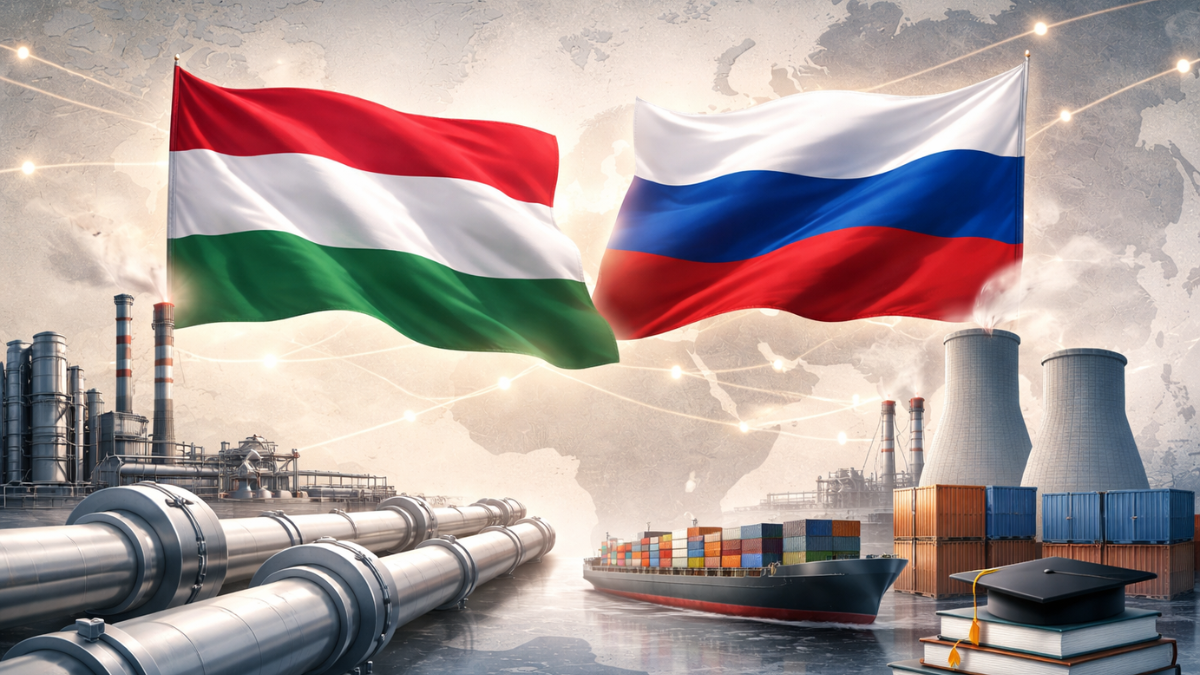


Newly obtained documents, not officially released to the public, show that Hungary and Russia have agreed on a 12-point cooperation plan aimed at strengthening ties across multiple sectors. The plan covers energy, trade, industry, healthcare, agriculture, construction, education, and cultural exchange.
The documents were prepared by the Russian side and were not previously made public. They describe efforts to build closer long-term cooperation between the two countries in both economic and social areas.
The agreement was signed after a meeting in Moscow in December 2025 during the 16th session of the Russian-Hungarian Intergovernmental Commission on Economic Cooperation. This commission has existed since 2005 and has generally met once a year in either country, though meetings were paused after 2021 following the escalation of the Ukraine conflict and later resumed.
Hungarian Foreign Minister Péter Szijjártó took part in the Moscow meeting along with Russian Health Minister Mikhail Murashko. The discussions covered trade, energy, industrial cooperation, healthcare, agriculture, construction, and cultural cooperation.
The documents describe the goal of strengthening “mutually beneficial ties” and expanding cooperation in both economic development and cultural exchange between the two countries.
Iran shares 10-point plan focusing on ceasefire alternatives and sanctions relief
Energy, Trade, Education, and Cultural Exchange at the Core
A major focus of the 12-point plan is energy cooperation, including oil, gas, nuclear fuel, electricity projects, and potential hydrogen energy development. The agreement also suggests possible involvement of Russian companies in energy-related projects in Hungary.
Trade is another key area, with the documents highlighting efforts to reverse a decline in bilateral trade after sanctions imposed by the European Union on Russia following the war in Ukraine. The plan aims to rebuild and expand trade flows.
Education is also included, with proposals to strengthen Russian language teaching in Hungary by bringing in teachers from Russia. The agreement also supports student exchange programs and improved recognition of qualifications between institutions in both countries.
Cultural and sports cooperation is also part of the plan, including joint programs and planned collaboration for 2026 and 2027. Exchange activities extend into creative areas such as performance arts and cultural events.
Healthcare cooperation is mentioned as well, with discussions involving Russian Health Minister Mikhail Murashko. The agreement also includes coordination in medical and public health-related fields.
The documents state that all cooperation must remain consistent with Hungary’s obligations as a member of the European Union, even as bilateral ties are expanded in multiple sectors.
UK secures tariff-free access to US market under new pharmaceutical agreement
Election-Time Political Debate Intensifies Over Russia Ties
The leak has intensified political debate in Hungary ahead of a parliamentary election scheduled for Sunday. The issue of relations with Russia has become a major campaign topic.
Hungarian leader Viktor Orbán is at the center of the discussion, with critics arguing that closer cooperation with Russia signals a shift in foreign policy direction. This comes as many European Union countries continue reducing reliance on Russian energy due to sanctions and the ongoing war in Ukraine.
Opposition figure Péter Magyar has strongly criticized the government’s approach, accusing it of moving too close to Moscow and raising concerns about national direction.
Foreign Minister Péter Szijjártó has defended the cooperation, stating that Hungary’s foreign policy decisions are based on national interest, especially regarding energy security and economic stability.
The documents also show continued engagement through the intergovernmental commission, which has remained active for years despite global tensions and sanctions following the Ukraine invasion.
The election campaign has been marked by political disputes, information leaks, surveillance allegations, and claims of foreign influence. The 12-point plan has become a central issue in these debates, drawing attention to Hungary’s ongoing economic and political relationship with Russia.