

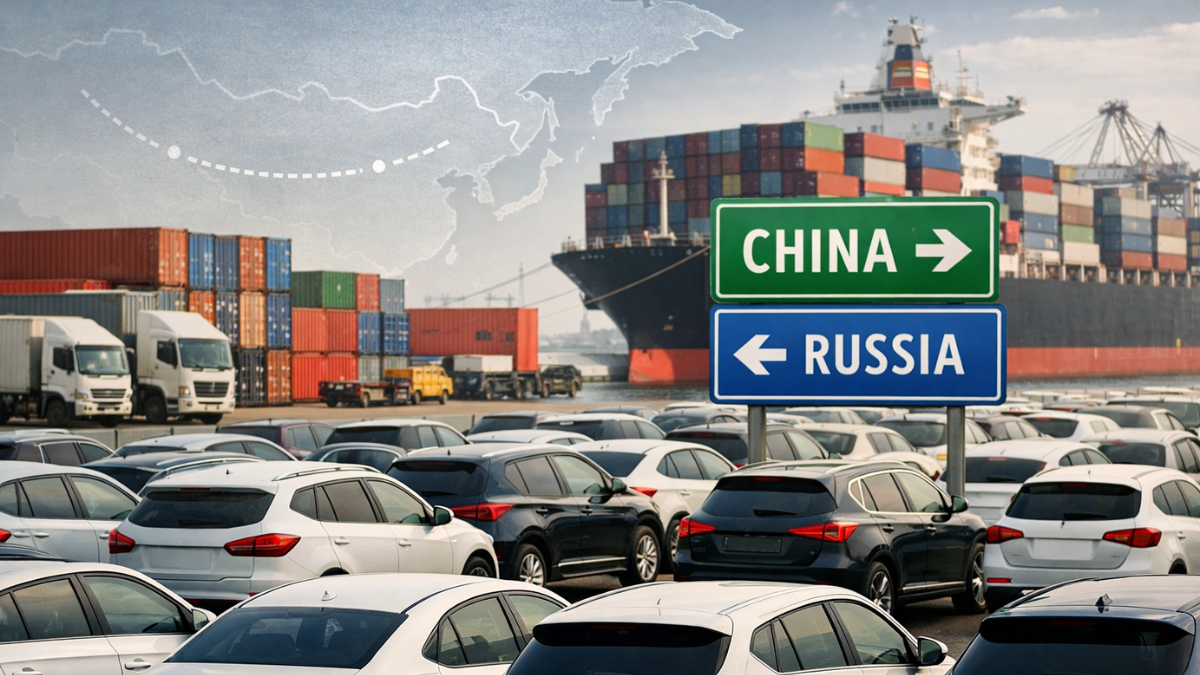


After Russia invaded Ukraine in 2022, many countries imposed sanctions to limit trade with Russia. The European Union, the United States, Japan, and South Korea all restricted the export of cars. These rules mainly targeted expensive vehicles, cars with large engines, electric vehicles, and hybrids.
Major automakers such as Toyota, Mazda, Mercedes-Benz, BMW, and Volkswagen Group announced they would stop or sharply limit their business in Russia. Factories closed, official dealerships lost support, and new deliveries were halted.
These actions caused a steep drop in official car sales. Before the war, Russia bought more than one million vehicles a year from countries that later imposed sanctions. After 2022, that number fell to roughly one-eighth of previous levels.
Despite this decline, foreign cars did not disappear from Russia. Registration data shows tens of thousands of vehicles from Western and Japanese brands continue to be sold each year. These cars are not entering through official company channels. Instead, they arrive through indirect and informal trade routes that sit outside automakers’ control.
Automakers say they prohibit sales to Russia and try to prevent unauthorized exports. They also say tracking violations across borders is complex and time-consuming. Even so, restricted vehicles continue to reach Russian buyers.
China Becomes the Main Gateway for Vehicle Imports
China has emerged as the main route through which foreign cars enter Russia. Many global automakers already build vehicles in China through partnerships with local companies. These cars are made for the Chinese market and for export.
EU expands sanctions on Russian oil, banks, and trade under 20th package
Cars manufactured in Europe, Japan, or South Korea are also often shipped to China first. From there, they can be resold and sent onward. This has turned China into a central transit hub for vehicles entering Russia.
Data from Russian research firm Autostat shows imports from China now account for a growing share of foreign-brand vehicles registered in Russia. The number of Western and Japanese brand cars made in China has more than doubled since 2023.
In 2025, nearly half of all vehicles sold in Russia from countries imposing sanctions were manufactured in China. Since early 2022, more than 700,000 vehicles from these foreign brands have been registered in Russia.
Japanese brands are especially prominent. Toyota was among the most purchased foreign brands in Russia last year, even though it stopped official exports in 2022. Almost all of these Toyotas were made in China. Mazda also recorded thousands of sales, with nearly all vehicles produced in China.
German brands remain in strong demand. Nearly 47,000 vehicles from BMW, Mercedes-Benz, and Volkswagen Group, including Audi, Porsche, and Skoda, were registered in Russia last year. More than 20,000 of these were built in China.
Trump administration blacklists Pacific Island officials in China-linked corruption move
Used-Car Labels and Gray Channels Enable the Trade
A key method used to bypass restrictions involves labeling new cars as “used.” Many vehicles exported from China to Russia are brand new but are registered once in China. This allows them to be classified as used cars with zero mileage.
Once labeled as used, these vehicles can be exported without needing approval from the automaker. This helps traders avoid company rules that block sales to Russia and makes sanctions harder to enforce.
China’s car market supports this practice. The market is highly competitive and supported by subsidies. Registering cars as sold helps dealers meet targets and claim benefits. Extra vehicles can then be exported.
In China, zero-mileage used cars are often sold at discounted prices. In Russia, the same cars are sold at prices close to brand-new vehicles. Demand is especially strong for hybrids and luxury SUVs.
Russian dealers usually do not stock these cars in advance. Instead, they buy vehicles one by one through chains of intermediaries. These gray-market networks rely on traders rather than official dealerships.
Sanctions experts such as Sebastiaan Bennink note that even strong restrictions are difficult to enforce fully. With multiple indirect routes and third-party traders involved, some restricted goods continue to reach Russia.
China and Russia both oppose unilateral sanctions and have said they consider them illegal. Trade between the two countries has grown, making China the primary channel for foreign vehicles entering Russia.