

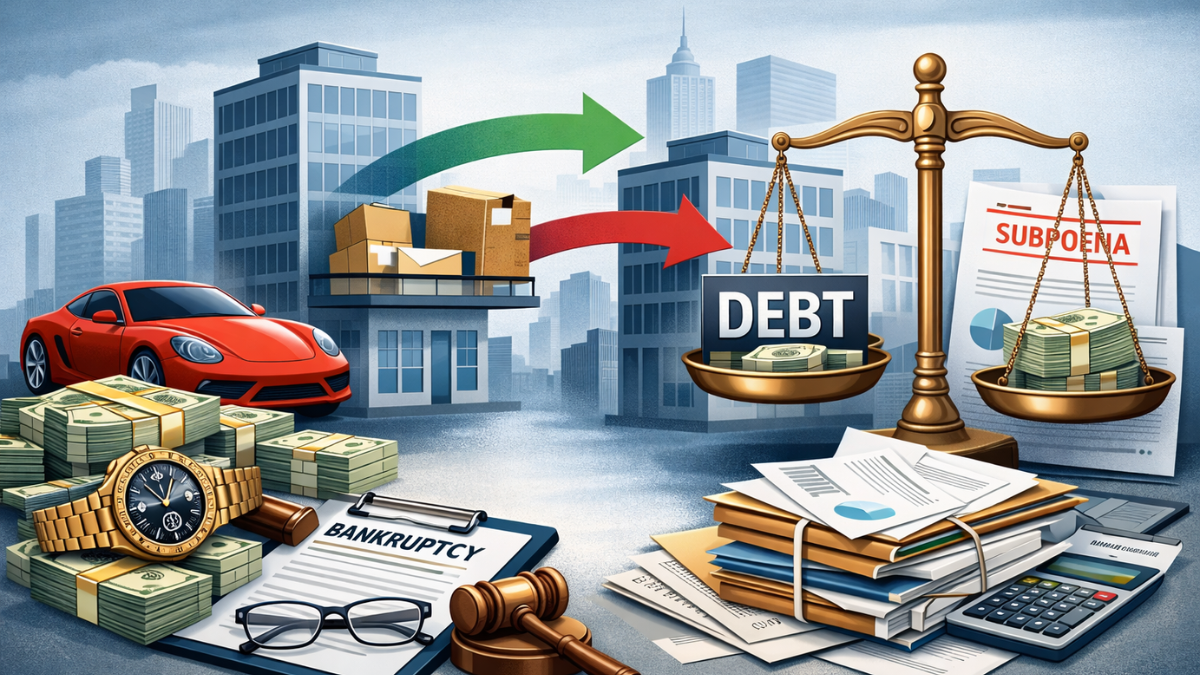


Bradley James Carlson, a businessman who owned and managed multiple companies, has agreed to give up the protections of bankruptcy after a federal investigation revealed attempts to hide millions of dollars in debts. The Bankruptcy Court for the Western District of Missouri recently approved his voluntary waiver of discharge, meaning Carlson remains personally responsible for over $8.4 million in debts. With the discharge waived, creditors are free to pursue him for payment once the case concludes.
Carlson was the chief executive of a holding company and several subsidiaries operating various businesses. These included real estate ventures and companies that manufactured and sold commercial food trucks. In November 2023, a state court appointed a receiver to take control of the corporate assets after the businesses defaulted on payments to their primary lender. The lender also alleged that Carlson and other senior executives diverted company funds to purchase luxury items such as sports cars and watches, as well as to cover personal projects, including extensive remodeling of Carlson’s multimillion-dollar residence.
On the day before the receiver’s appointment, businessman transferred the business assets to newly created entities controlled by his girlfriend and another executive. Despite these transfers, Carlson continued to manage the businesses. He and his staff informed customers and employees that the original companies were undergoing rebranding. This appeared to maintain normal business operations while shielding assets from creditors.
DOJ sues Minnesota, calls affirmative action hiring ‘illegal discrimination’
Bankruptcy Filing by Businessman
In February 2024, Carlson filed an individual Chapter 7 bankruptcy case in an attempt to avoid personal liability for several financial guarantees tied to his enterprises. The U.S. Trustee Program (USTP), part of the Department of Justice, began investigating the bankruptcy filing. The Kansas City office of the USTP issued subpoenas for bank and business records, uncovering additional transfers of corporate assets to newly formed entities. Carlson continued to manage these assets while the investigation was ongoing.
As evidence of repeated transfers and attempts to conceal assets mounted, businessman ultimately agreed to waive his bankruptcy discharge. This decision means that his debts will not be eliminated through bankruptcy, and he remains liable for more than $8.4 million. Creditors can now pursue him directly to recover their funds.
This case highlights the lengths some business owners may go to in order to use bankruptcy strategically while continuing to control company assets. Carlson’s repeated transfers demonstrate how asset concealment can undermine creditors’ rights and the integrity of the bankruptcy system, prompting the USTP to take action.
DOJ charges Luis Nino-Moncada linked to foreign gang after violent attack on Border Patrol agents
Role of the U.S. Trustee Program
The U.S. Trustee Program ensures the fairness and integrity of the bankruptcy system for debtors, creditors, and the public. Acting U.S. Trustee Jerry Jensen of Region 13, which includes the Western District of Missouri, emphasized the importance of enforcing the law against attempts to abuse the bankruptcy process.
“The USTP is committed to combating fraudulent and abusive conduct that threatens to undermine the integrity of the bankruptcy system,” Jensen said. “We will enforce the law against those who try to use the system to gain an unfair advantage.”
The USTP operates nationwide with 21 regions, 82 field offices, and an Executive Office in Washington, D.C. The agency oversees bankruptcy cases, investigates potential fraud, and ensures that all parties are treated fairly. By enforcing these rules, the USTP helps maintain confidence in the bankruptcy system and prevents misconduct that could harm creditors and the public.
After repeatedly moving assets and creating new entities to hide them, Bradley James Carlson’s decision to waive his discharge confirms that he remains fully accountable for his debts. The case demonstrates the USTP’s role in uncovering attempts to manipulate the system and reinforces the principle that bankruptcy cannot be used to avoid financial responsibility when assets are concealed.