

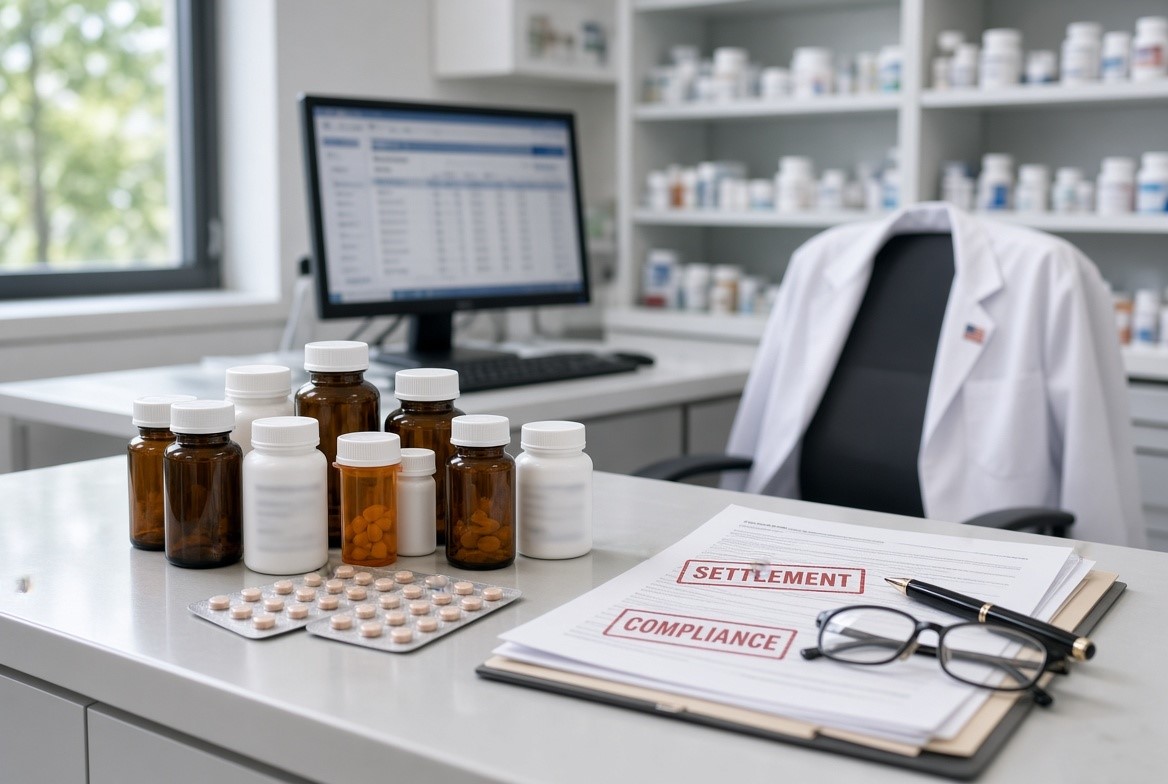


CVS Pharmacy Inc. and its related corporate entities have agreed to pay $315 million to resolve allegations that they illegally dispensed opioid medications and other controlled substances and submitted false claims to federal healthcare programs. The settlement, announced by the U.S. Department of Justice (DOJ), covers alleged violations of federal law between October 17, 2013, and December 2, 2025.
The government alleged that CVS pharmacies filled prescriptions that lacked a legitimate medical purpose or were not valid under professional standards. Many of these prescriptions were subsequently billed to Medicare and other federal healthcare programs, allegedly violating the False Claims Act.
The settlement also requires CVS to implement additional safeguards for dispensing controlled substances, including monitoring prescription patterns and establishing a reporting hotline. CVS denies the allegations, and the settlement does not constitute an admission of liability.
Key details of the CVS settlement
| Case detail | Information |
|---|---|
| Company | CVS Pharmacy Inc. and related corporate entities |
| Settlement amount | $315 million |
| Period covered by allegations | October 17, 2013, to December 2, 2025 |
| Federal laws involved | Controlled Substances Act and False Claims Act |
| Alleged conduct | Unlawful dispensing of controlled substances and false federal healthcare claims |
| Civil complaint filed | December 13, 2024 |
| Additional requirements | Prescription monitoring, a reporting hotline, and evaluation of prescribers suspected of illegal prescribing |
| Whistleblower | Hillary Estright, a former CVS employee |
Independence Blue Cross (IBX) to Pay $22.5 Million to Resolve False Claims Act Allegations
DOJ alleges CVS filled invalid opioid prescriptions
The government’s complaint, filed on December 13, 2024, in the U.S. District Court for the District of Rhode Island, alleged that CVS knowingly filled prescriptions for controlled substances that were invalid, lacked a legitimate medical purpose, or were not issued in the usual course of professional practice.
The alleged conduct included:
- Dispensing dangerous or excessive quantities of opioids.
- Filling opioid prescriptions too early.
- Filling so-called “trinity” prescriptions, which combine an opioid, a benzodiazepine, and a muscle relaxant.
- Filling prescriptions from alleged “pill mill” prescribers who issued large volumes of controlled-substance prescriptions without a legitimate medical purpose.
According to the government, CVS pharmacists continued to fill certain prescriptions despite warning signs that they might be unlawful or medically unnecessary. Many of these prescriptions were subsequently reimbursed by federal healthcare programs.
The Controlled Substances Act governs the handling and dispensing of controlled medications, while the False Claims Act allows the government to pursue claims involving false or fraudulent demands for federal funds.
Dompé reaches major $32 million settlement over alleged Medicare co-pay kickbacks
Government complaint raises concerns about staffing and compliance
The complaint also alleged that CVS’s corporate performance targets, incentive compensation arrangements, and staffing policies prioritized business performance over patient safety.
According to the government, CVS did not employ enough pharmacists to meet patient needs, satisfy corporate performance metrics, and comply with legal obligations simultaneously.
The complaint further alleged that company policies restricted pharmacists from warning colleagues about certain problematic prescribers. The government argued that these practices weakened safeguards intended to identify prescriptions that could involve diversion, abuse, or the inappropriate use of controlled substances.
These claims formed part of the government’s civil case against CVS. The settlement resolves the allegations without a judicial determination of liability.
CVS must introduce additional prescription safeguards
Alongside the financial settlement, CVS entered into a memorandum of agreement with the U.S. Drug Enforcement Administration (DEA) addressing its future obligations when dispensing controlled substances.
The agreement requires CVS to implement several measures:
- Reporting hotline: Establish a hotline through which employees and members of the public can report suspected unlawful dispensing of controlled substances.
- Proactive monitoring: Monitor prescription dispensing patterns across its pharmacies to identify and address potentially unlawful activity.
- Prescriber evaluation: Establish a process to evaluate prescribers suspected of issuing unlawful prescriptions.
AIDS Healthcare Foundation Agrees to $1.44 Million False Claims Act Settlement
The measures are intended to strengthen oversight and help identify warning signs before potentially unlawful prescriptions are dispensed.
DEA Assistant Administrator Cheri Oz said the agreement reinforces the agency’s commitment to public health and responsible dispensing. The DOJ said the additional safeguards are intended to protect patients and federal healthcare programs.
Federal agencies coordinate on healthcare fraud enforcement
The CVS settlement involved several DOJ divisions and U.S. Attorneys’ Offices, along with the DEA and multiple federal investigative agencies.
The investigation and resolution involved the DOJ’s Civil Division Commercial Litigation Branch, Fraud Section, and Enforcement and Affirmative Litigation Branch. Participating U.S. Attorneys’ Offices included those for the District of Rhode Island, Eastern District of Virginia, Eastern District of Texas, and District of Hawaii.
Other agencies that assisted included the Department of Health and Human Services Office of Inspector General (HHS-OIG), Defense Criminal Investigative Service, Defense Health Agency, Office of Personnel Management, Department of Labor Office of Inspector General, and Department of Veterans Affairs.
HHS-OIG Acting Deputy Inspector General for Investigations Scott J. Lampert said the allegations highlighted warning signs that should not be overlooked when dispensing controlled substances.
The coordinated action reflects the role of civil enforcement in addressing alleged healthcare fraud and protecting federal program funds.
Former CVS employee filed whistleblower lawsuit
The settlement also resolves a civil lawsuit filed by Hillary Estright, a former CVS employee, under the whistleblower provisions of the False Claims Act.
Abbott Laboratories to Pay $384.99 Million to Resolve False Claims Act Allegations.
The law allows private individuals to bring lawsuits on behalf of the United States and potentially receive a share of the recovery. The government can intervene in these cases and take over the litigation, as it did in this matter.
The amount Estright may receive from the settlement has not yet been determined.
The DOJ said enforcement under the False Claims Act remains an important tool for recovering taxpayer funds and addressing alleged fraud involving federal programs.
CVS settlement resolves allegations, not a finding of liability
The $315 million agreement resolves the government’s civil claims concerning the alleged unlawful dispensing of controlled substances and related federal healthcare claims during the period specified in the settlement.
CVS denies the allegations, and the settlement agreement states that there has been no determination of liability. The resolution therefore should not be described as a court finding that CVS violated the law.
The agreement combines a financial resolution with new dispensing safeguards intended to strengthen oversight of controlled substances at CVS pharmacies.
To read the original order please visit DOJ (Department of Justice) website